

Multilingual website
Multilingual websites with international SEO and correct hreflang
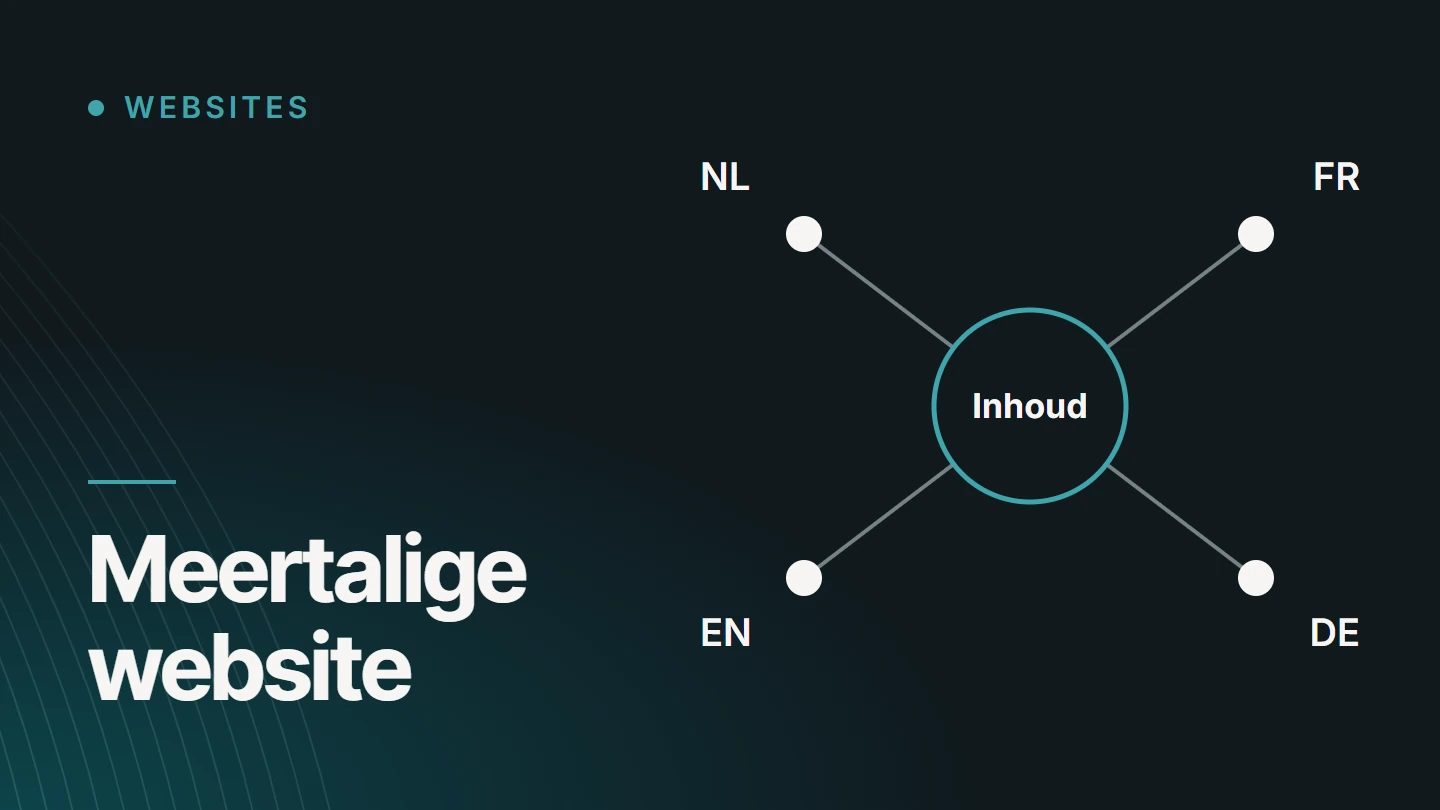
In Belgium, one language is often not enough: customers search in Dutch, French and often English too. A multilingual website needs more than translated copy. Each language gets its own pages, URLs and content suited to that market. I design and build that structure, including the technical SEO.
- Dedicated URL for each language
- Hreflang and canonicals
- Translation and localisation
- Work directly with Dries
At a glance
What is a multilingual website?
A multilingual website offers the same content in more than one language, with each language version at its own address. Visitors choose their language, and search engines show each visitor the version in the language they search in. The latter only works when the language versions are correctly linked technically.
International SEO makes this possible: a URL structure for each language or country, hreflang references between versions, compatible canonicals, and content researched and written for each market. For a Belgian business, this usually starts with Dutch and French.
At MadeByDries, Dries Nijs builds the website and language structure as one project, making multilingual support part of the foundations from the start.
When
When do you need a multilingual website?
When some of your customers search in a language other than your website’s language. Adding a language makes sense if you can also serve those customers in that language.
- Customers in Flanders and Wallonia You serve all of Belgium, but your website only speaks to one part of the country.
- Operating in Brussels A bilingual market with a large English-speaking audience as well.
- Cross-border sales The Netherlands, France or Germany as sales markets, each with its own search behaviour.
- International B2B Buyers and partners who search and compare in English.
- An online shop with overseas customers Product information, shipping and payment in the buyer’s language.
- Tourism, property and rentals Sectors where customers naturally come from several countries.
If you serve a larger organisation with multiple markets and teams, read more under medium-sized and large organisations.
Content
Translation or localisation: what is the difference?
Translation converts words into another language. Localisation makes the page right for the reader in that market. For visibility, you need the latter.
The same text, another language
Translation
The content is translated as it stands. For practical pages, such as terms and conditions or a contact page, this is usually enough. Automatic translation can provide a first draft, but a native speaker should ideally review it before publication.
The same message, another market
Localisation
The content is adapted to how people search and make decisions in that market: different search terms and examples, the correct currency, VAT wording and contact details. A French-speaking Belgian does not always search using the words a literal translation would produce.
In practice, the approach combines both: localise the most important pages and translate the rest carefully. Keyword research for each language determines which pages matter most.
Technology
The technical structure of a multilingual website
Eight elements determine whether search engines understand your language versions correctly. They are established before the first translation.
01
A dedicated URL for each language
Every language version of a page has its own address. A language switch that only sets a cookie and leaves the URL unchanged is invisible to search engines: they see only one language.
02
A clear URL structure
A subdirectory for each language, a subdomain or a separate domain for each country. The choice depends on your markets and organisation, and is difficult to reverse later.
03
Hreflang
References through which each page identifies its other language versions and their intended language or region. Each version references itself and all the others, and those references are reciprocal. The rules and pitfalls are covered in hreflang for Belgian Dutch/French websites.
04
Canonicals
Each language version identifies itself as the preferred page. A canonical from the French page to the Dutch page signals that the French page does not need to be indexed. Read more in the article on the canonical tag.
05
Translated slugs and metadata
The address, title and description are also in the page’s language, written for searches in that language.
06
A language switcher that works
A link to the same page in the other language, rather than the homepage. Use language names instead of flags: a flag represents a country, not a language.
07
No forced redirects
Automatically redirecting visitors based on location or browser language keeps them, and crawlers, away from other versions. You can offer a suggestion, but should not force a redirect.
08
Structured data and sitemaps for each language
Markup and sitemaps follow the language versions, so each is fully described and discoverable.
The choice
Subdirectory, subdomain or a separate domain for each country?
All three are technically valid. Google describes the options in its documentation on multilingual and multi-regional websites.
voorbeeld.be/fr/
Subdirectory
All languages on one domain. Easy to manage, with all versions contributing to the same website. Often the logical choice for a Belgian business with one brand.
fr.voorbeeld.be
Subdomain
Each language on its own subdomain. Useful when language versions need to run separately for technical reasons, but requires more administration.
voorbeeld.fr
Separate domain for each country
A clear signal for one country, and recognisable to local visitors. Each domain does need to be developed and maintained separately.
I choose the right structure together with you, based on your markets, brand and who maintains the content.
International SEO
What international SEO adds to a multilingual website
The technology helps search engines show the right version. Whether that version gets found also depends on its content and how well known you are in that market.
International SEO is therefore the part of the website project carried out for each language and country. Read about the broader SEO work under SEO consultant.
- Keyword research for each language What people actually type in that language and country, rather than a translation of your Dutch search terms.
- Language or country Are you targeting everyone who speaks French, or Belgium specifically? This determines the structure and hreflang codes.
- Content for each market Pages that answer questions as they are asked in that market, with examples familiar to those readers.
- Technical checks Check indexing, canonicals and hreflang for each language version. This is part of technical SEO.
- Recognition in that market Mentions and links from websites in the country or language region where you want to be found.
- Monitor each language Use Search Console to review visibility and identify issues by country and language version.
Belgium
Dutch and French: the Belgian context
Belgium has three official languages, and two matter for most businesses: Dutch and French. Businesses selling nationwide or in Brussels need both. English serves an international audience, while German serves the East Cantons or the German market.
Belgian Dutch differs from Dutch in the Netherlands, and Belgian French differs from French in France. A Flemish speaker says KMO where someone in the Netherlands says mkb, and a French-speaking Belgian uses different number words from a French person. Hreflang identifies one page as intended for Dutch-speaking Belgium and another for French-speaking Belgium.
Practical details also differ between language versions: VAT wording, legal text, telephone numbers and the address customers can visit. These should be accurate in every language.
Technology
Multilingual WordPress, WooCommerce or bespoke development
The language structure can be built on any platform. Choose the platform based on the website’s needs, rather than its number of languages.
Content websites
WordPress
In WordPress, where the project calls for it, this can be done with a multilingual plugin such as WPML: each page has translations with their own URLs, and you manage all languages in one environment. Read more about development at WordPress website development.
Online shops
WooCommerce
Products, categories, attributes, emails and checkout must all appear in the correct language. Cross-border sales also involve currency, VAT and shipping by country. See online shop development.
React and Next.js
Bespoke development
In a bespoke platform, language is part of the routing: each language has its own path, with translated content from the database. Hreflang and metadata are generated in code. See bespoke web applications.
Pitfalls
Mistakes that make a multilingual website hard to find
- Translating only the homepage and menu, leaving the rest in one language
- Publishing machine translation without anyone reviewing it
- One URL for all languages, with a cookie-based language switch
- Hreflang references that are not reciprocal or point to removed pages
- Pointing every language version’s canonical to the main language
- Forcing visitors to redirect based on location
If your website already has multiple languages and any of these issues sound familiar, reviewing the language structure is the first step. If that structure is then changed, URLs change too, making it a website migration.
Organic Web
Multilingual development with Core. Code. Growth.
I treat design, development and visibility as one system. I call this Organic Web. For a multilingual website, this means the following.
01
CORE.
Determine which markets you serve, in which languages, and which pages matter most in each.
02
CODE.
Build the language structure: URLs, hreflang, canonicals and templates that accommodate every language.
03
GROWTH.
Monitor visibility for each language, adding languages or pages when the market calls for them.
How I work
How I approach a multilingual website
The language structure is established before design begins. Every template can then accommodate longer text and different word lengths.
You supply the translations, or we agree who will provide them. I ensure they appear in the right places and are correctly linked technically.
01
Markets and languages
Which languages, for which countries, and in what order of priority.
02
Structure
The URL structure, language codes and which pages exist in which languages.
03
Design and development
Templates, language switcher and administration, tested with real text in every language.
04
Content and translation
Translated and localised pages, with their own titles and descriptions.
05
Checks and launch
Hreflang, canonicals, sitemaps and indexing checked for each language version.
Projects
Multilingual projects
Three multilingual projects I built: a WordPress property platform, a WooCommerce shop in four languages and a Next.js platform with four language versions.
Website · Multilingual SEO · SEO · Web design
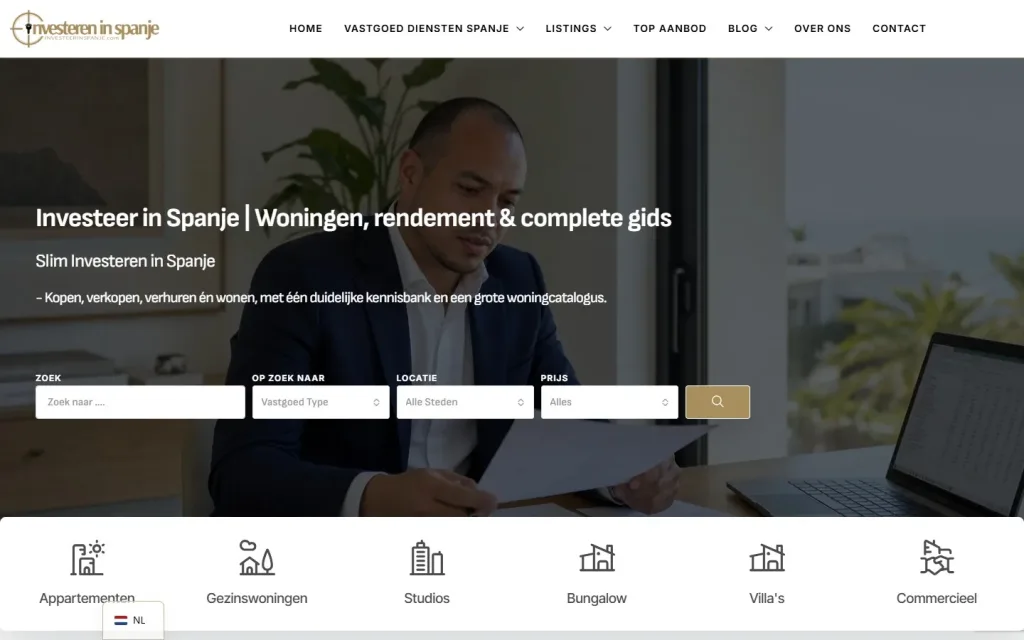
Investeer in Spanje
Multilingual property platform for Spain, with a search function, around 1,500 properties per language, service pages and a blog on buying, investing and legislation.
- WordPress
Web design · WordPress · WooCommerce
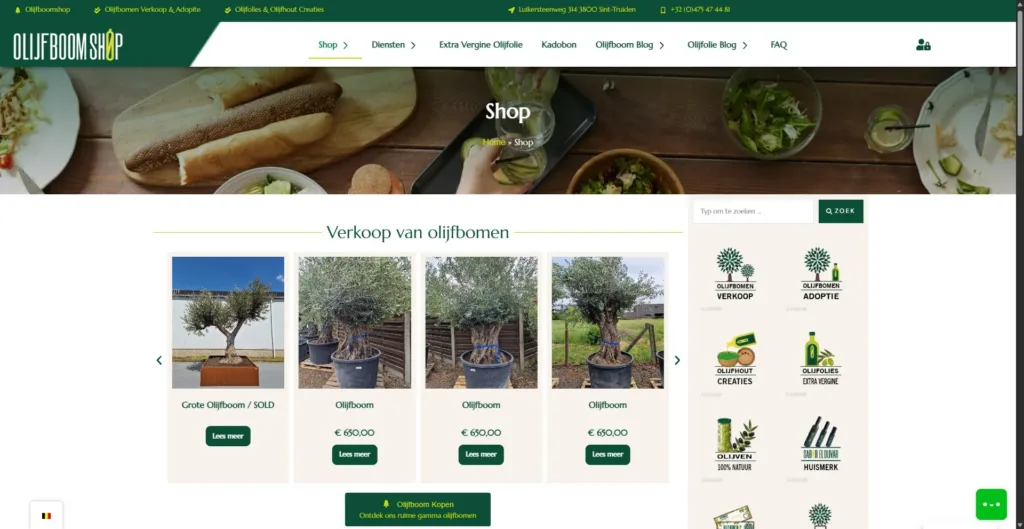
Olijfboom Shop
A WooCommerce shop in four languages, with an olive tree adoption scheme and its own knowledge base.
- WordPress
- WooCommerce
- Mollie
React & Next.js · E-commerce · Organic Web
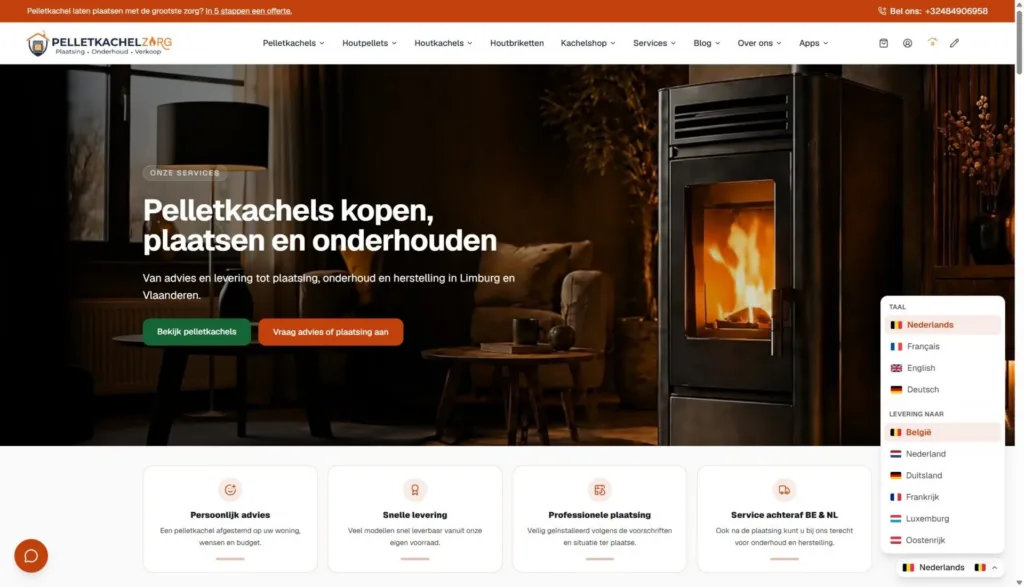
Pelletkachelzorg
My own commerce platform in React and Next.js for the sale, installation and servicing of stoves, in four languages.
- React
- Next.js
- Claude
- GPT
Pricing
How much does a multilingual website cost?
Multiple languages generally increase a website’s scope. The final category and price depend on the number of languages, templates, content and technical setup. As a guide: a large-scale website starts at € 3,495 excl. VAT, and an online shop at € 3,495 excl. VAT. The final quote is based on the agreed scope.
These are project prices for development, not a subscription. Translations themselves are not included unless agreed. For international SEO on an existing website, I can define the scope and price after an initial analysis. All prices and pricing factors are covered in how much does website development cost.
- Number of languages Each language requires structure, content entry and checks.
- Number of pages per language Translate everything, or select pages for each language.
- Translation or localisation Translate existing content, or rewrite it for each market.
- Who translates You supply the text, or a translator is brought in.
- Online shop Products, checkout, VAT and shipping for each country.
- Existing website Build from scratch, or add a language structure to an existing website.
Why Dries
A multilingual website from someone who understands the technology behind it
- Structure before translation The language structure is established before any text is translated.
- Development and SEO together Hreflang and canonicals are part of the build, rather than an afterthought.
- WordPress and bespoke development I build multilingual sites with both, choosing what fits your project.
- Direct contact You work with the person who builds the website.
About the specialist
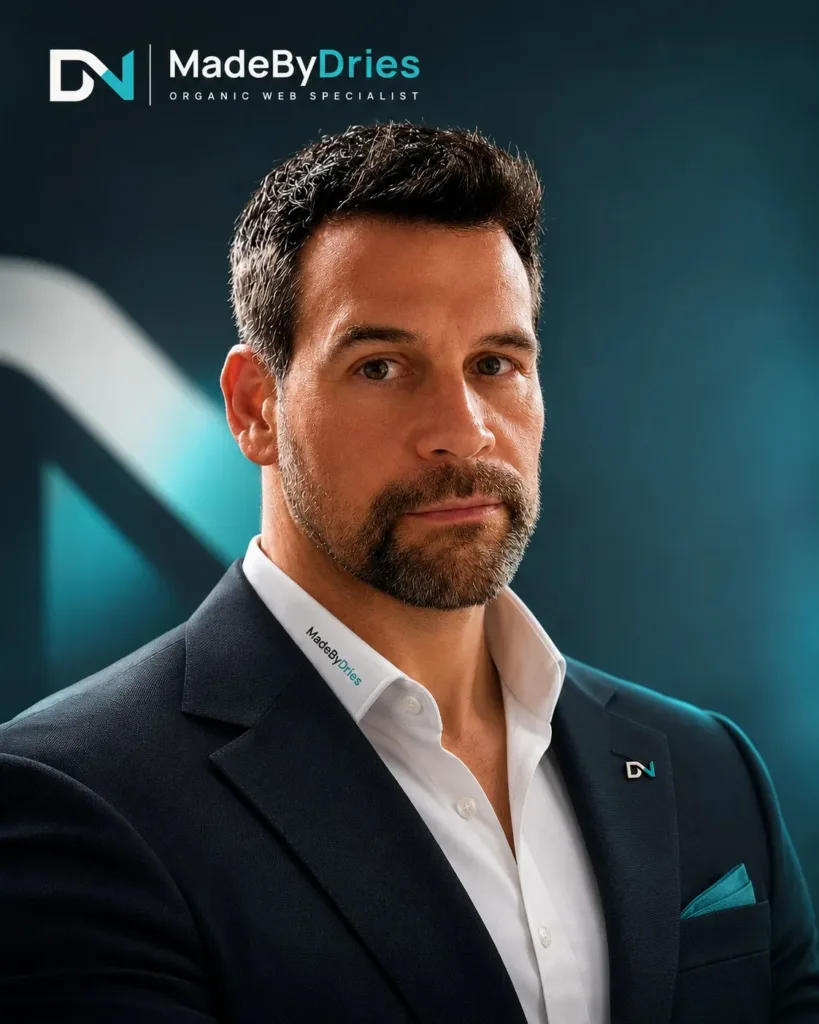
Dries Nijs, Organic Web Specialist
I am Dries Nijs, a web designer, developer and Organic Web Specialist from Maasmechelen. I have been building websites, online shops and web applications since the 1990s, including platforms in four languages. For a multilingual website, I combine design, development and international SEO. MadeByDries is the personal brand under which I work.
FAQ
Frequently asked questions about multilingual websites
What is hreflang?
Hreflang is a reference in a page’s code indicating which other language or country versions of that page exist. Search engines use it to show the French version to someone searching in French and the Dutch version to someone searching in Dutch. Each version references itself and all the others.
What is international SEO?
International SEO means optimising a website for multiple languages or countries. It includes the URL structure for each language, hreflang, canonicals, keyword research for each market and content written for that market. For a Belgian website, it usually starts with Dutch and French.
How can I translate a website automatically?
With a translation plugin or service that translates the text automatically. This quickly provides a first draft. Pages that need to persuade customers or get found require review by a native speaker: otherwise, search terms and tone rarely match the market.
How much does a multilingual website cost?
Multiple languages generally increase a website’s scope. The final category and price depend on the number of languages, templates, content and technical setup. As a guide: a large-scale website starts at € 3,495 excl. VAT. Translations themselves are a separate cost.
Is WordPress suitable for a multilingual website?
Yes. With a multilingual plugin, each page has translations with their own URLs, and you manage all languages in one environment. The language structure, hreflang and canonicals must be configured correctly, and menus, forms and messages also need translating.
How can I translate WooCommerce?
By setting up the shop in multiple languages: products, categories, attributes, checkout and customer emails each receive a translation. If you sell in other countries, currency, VAT and shipping options also need to be configured for each country.
Do I need a separate domain for each language?
No. A subdirectory for each language on the same domain works well for most businesses and is the easiest option to manage. A separate domain for each country makes sense when you have a separate organisation or brand in each country.
Can I add a language later?
Yes, when the structure is prepared for it. That is why I establish the language structure at the start, even if the website initially launches in one language. Adding a language then involves content entry and checks, rather than restructuring.
Need a website in more than one language?
Tell me which languages and markets you want to serve, and whether you already have a website. We can then assess which structure fits.