


For agencies
White-label web development for agencies: WordPress, WooCommerce and React
Your agency sells a website, an online shop or a platform, and the build does not fit into your schedule or is not something your team does. I take over the development as a subcontractor: from a supplied design to a delivered, tested website. Your client remains your client.
- WordPress and WooCommerce
- React, Next.js and Node.js
- Under your name
- One developer as your point of contact
At a glance
What is white-label web development?
White-label web development means that an external developer builds a website, online shop or web application for an agency’s client, while the agency sells and delivers the project under its own name. The agency keeps the client relationship and the design or strategy; the developer handles the technical implementation.
At MadeByDries, that developer is Dries Nijs. I build in WordPress and WooCommerce, and in React, Next.js and Node.js when a project calls for bespoke development. You work directly with the person who writes the code, with no intermediaries.
The difference from hiring a developer through a staffing agency: you are not buying hours of someone’s time in your office, but an agreed result. A page, an online shop or a module, with a clear scope and a price you can include in your own quote. If visibility is what you mainly need help with, white-label SEO is a better fit.
Who I work with
Which agencies is white-label web development for?
For agencies and freelancers who sell or design websites, but do not build them themselves, or not always.
- Design and branding agencies You design the brand and the website, and are looking for someone to translate the design accurately into code.
- Marketing agencies Your client wants a new website to go with the campaign, but development is not part of your team.
- SEO agencies You advise on structure and technology, and want someone to build it as well.
- Web agencies You have developers, but more work than hands, or a project outside your usual stack.
- Freelance designers You work alone and want to take on a project that is bigger than what you can build yourself.
- Communications agencies A website is one part of a larger project, and you want to outsource the build.
When
When should you outsource web development?
Hiring a permanent developer is a big step. At these moments, a web development subcontractor is the simpler solution.
- Your schedule is full A project comes in that you want to take on, but your own developers are busy.
- The technology is missing The client wants a WooCommerce shop or a platform in React, and that is not something your team builds.
- The design is ready The design has been approved and needs to be turned into a working, responsive website.
- A project has stalled The build has started, but is not getting finished, or not to the standard your client expects.
- Bespoke work is needed An integration, a calculator or a customer area: functionality no plugin can provide.
- You want to offer more You want to say yes to online shops or web applications without building a team for them.
Technology
What I build as a white-label developer
I work in two worlds: WordPress for websites and online shops that the client manages themselves, and React for applications with custom logic.
01
White-label WordPress
Business websites on WordPress, built from your design: custom templates, reusable blocks and an admin environment in which your client edits content themselves. How I build WordPress websites is explained on the page for end clients.
02
White-label WooCommerce
Online shops with catalogue, variants, payment and shipping, plus the customisations a standard installation does not offer, such as custom product logic or a tailored checkout. More about WooCommerce shops.
03
React and Next.js
Platforms, portals, dashboards and configurators with custom logic, built in React and Next.js, with Node.js on the server side. See also bespoke web applications.
04
From design to code
You supply the design, and I build it faithfully across all screen widths. Where the design leaves something open, such as an in-between size or an error message, I put the choice to you rather than guessing myself.
05
Integrations
Connections to the client’s systems via an API: forms that feed into a CRM, product data from another system or a payment provider.
06
Technical foundation for SEO
Semantic HTML, a logical URL structure, metadata, structured data and fast loading times are part of the build. A later SEO round then does not have to start with repair work. More about technical SEO.
07
Redesign and migration
Moving an existing website to a new design or platform, with attention to the existing URLs and redirects.
08
Further development
Extensions to a website that is already live: a new template, an additional language or a new feature. For updates and technical management, there is WordPress maintenance.
Format
A full project, or just part of one?
You choose how much you outsource, project by project.
From design to launch
Full build
You supply the design and the content; I deliver a tested website that is ready for launch. You handle the coordination with the client.
A module or integration
One component
Your team builds the website; I take on the specialist part: the online shop, an integration, a configurator or the technical SEO foundation.
In an ongoing project
Stepping in
A project that is overrunning or stuck. I first look at what is there and then tell you honestly what is achievable within your deadline.
For an ongoing project, I always start with a brief analysis of the existing code. Only then do we agree on a scope and a price.
Collaboration
Behind the scenes, or visible as the developer
You decide how the client sees the collaboration. We clearly agree on the division of roles and communication in advance.
Under your name
Invisible
The project belongs to your agency. Questions and feedback from the client come through you, and I deliver to you.
As a technical partner
Visible
You involve me in a technical discussion when that saves time, for example for an integration with the client’s system.
NDA available
Confidentiality
Designs, client data and access credentials stay within the project. If you want to formalise that in a non-disclosure agreement, that is possible.
We also agree in advance on what happens after delivery: who supports the client, and whether the project may be shown as a reference. That way everyone knows where they stand.
How I work
How a white-label project works
Outsourcing a project works when the agreements are clear from the outset. That is why every project starts with a scope on paper.
We agree on the technical workflow and environment in advance.
I agree on a timeline for each project, once its size is clear.
01
Introduction
What your agency does, which projects you want to outsource and how your team works.
02
Brief and scope
The design, the functionality, the content and what the client expects. A price follows from that.
03
Agreements
The division of roles, the environment I build in, the testing points and the form of delivery.
04
Build
The development, with interim check-ins as agreed in advance.
05
Testing
Checks across screen widths and browsers, from forms and links to speed.
06
Delivery to the agency
The website, the access credentials and a short explanation of how to manage it.
Quality
What you can expect from the code
A website you deliver under your own name must also be technically sound. This is part of every project, even when the client does not ask for it.
- True to the design Spacing, typography and behaviour as designed, at every screen width.
- Manageable The client can edit content themselves without breaking the layout.
- Fast Lightweight pages and correctly sized images, with mobile coming first.
- Discoverable A crawlable, indexable structure with correct metadata.
- Accessible Semantic headings, sufficient contrast and keyboard navigation.
- Transferable Built with the platform’s standard mechanisms, as described in the WordPress developer documentation, so your team can carry on working with it later.
Choice
WordPress or React for your client's project?
Sometimes the technology is already fixed in your quote. If not, I can help you work out what fits.
Content and sales
WordPress and WooCommerce
The logical choice when the client wants to manage pages, news or products themselves and the functionality is largely standard. Most business websites and online shops fall into this category.
Custom logic
React and Next.js
The logical choice when users log in, process data or go through a process that no standard package supports: a portal, a booking system or a SaaS platform.
If you are unsure which to choose, tell me what the client needs to be able to do with the website. The technology follows from that answer, not the other way round.
Flexible
One project, or a regular subcontractor
You can bring me in for one website and leave it at that. Agencies that outsource more often benefit from the fact that I already know their way of working, their components and how they deliver: the second project starts faster than the first.
There is no mandatory commitment or monthly plan. You bring me in when there is a project, and each project gets its own scope and price.
If you also have questions about visibility alongside development, the same person can help. You can find an overview of what I do for agencies under white-label partner for agencies.
Projects
Projects in WordPress, WooCommerce and React
Three projects for which I did the entire build: a WordPress website, a WooCommerce shop and a rental platform in React.
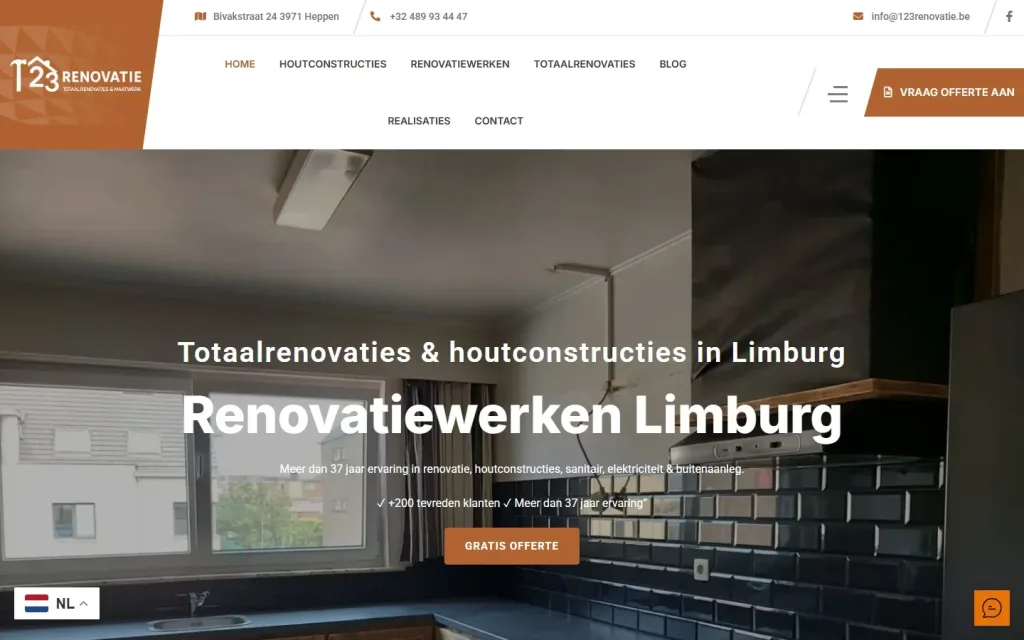
Website · SEO · Web design
123Renovatie
Website for 123Renovatie, a renovation company in Limburg, with a broad service structure, completed projects, a blog and quote requests.
- WordPress
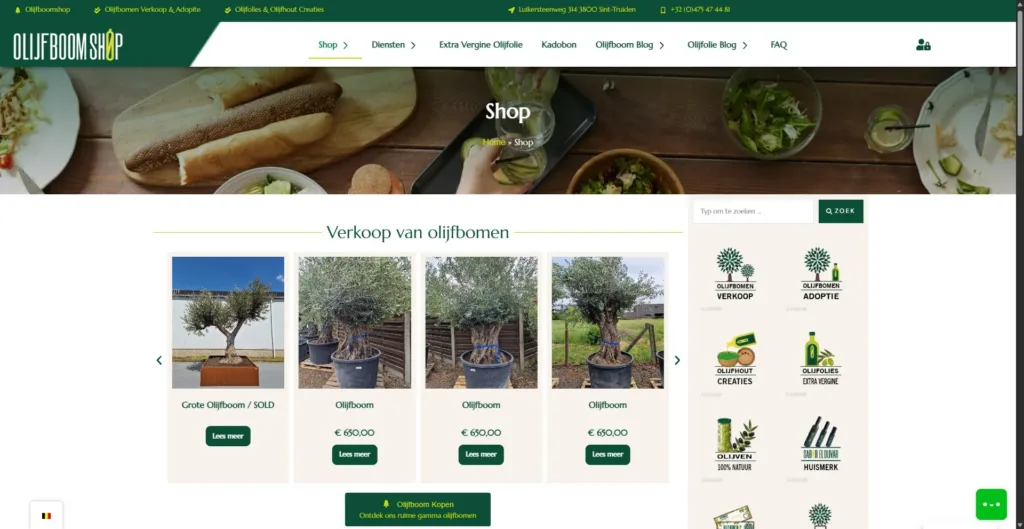
Web design · WordPress · WooCommerce
Olijfboom Shop
A WooCommerce shop in four languages, with an olive tree adoption scheme and its own knowledge base.
- WordPress
- WooCommerce
- Mollie
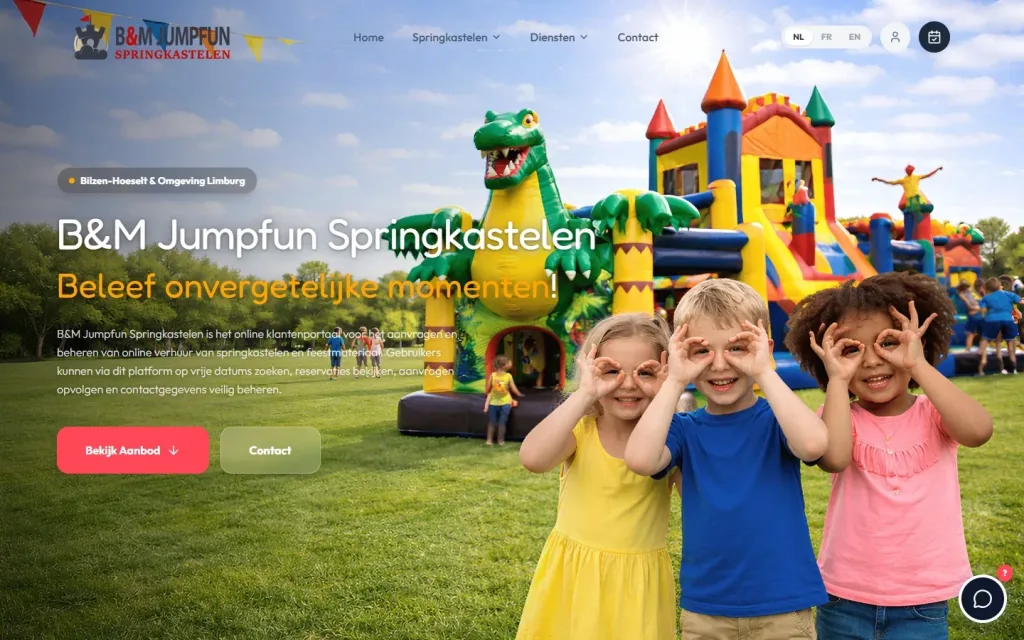
React app · Web application · Full-stack Development
BM Jumpfun
A multilingual React app that brings together the catalogue, bookings, scheduling and administration of a rental business.
- React
- Claude
- GPT
- Gemini
Pricing
How much does white-label web development cost?
Pricing for white-label web development is on request. You receive a price per project, based on an agreed scope, so you can include it in your quote to the client.
I work with a price per project and not with a mandatory monthly plan. If the scope changes along the way, we discuss it before the work is done.
- Project type A website, an online shop, a web application or a component of one.
- Number of templates How many different page types and components need to be built.
- Functionality Forms, filters, a customer area, a configurator or payments.
- Integrations The number of external systems and how well their API is documented.
- State of the design A fully worked-out design requires less coordination than a sketch.
- Languages and content The number of languages and who enters the content.
Why Dries
A developer who also keeps an eye on visibility
- One point of contact You deal with the person who builds, not with a project manager.
- Two stacks WordPress and WooCommerce, and React, Next.js and Node.js.
- SEO built in The technical foundation for search engines and AI systems is there from the start.
- Long experience I have been building for the web since the 1990s.
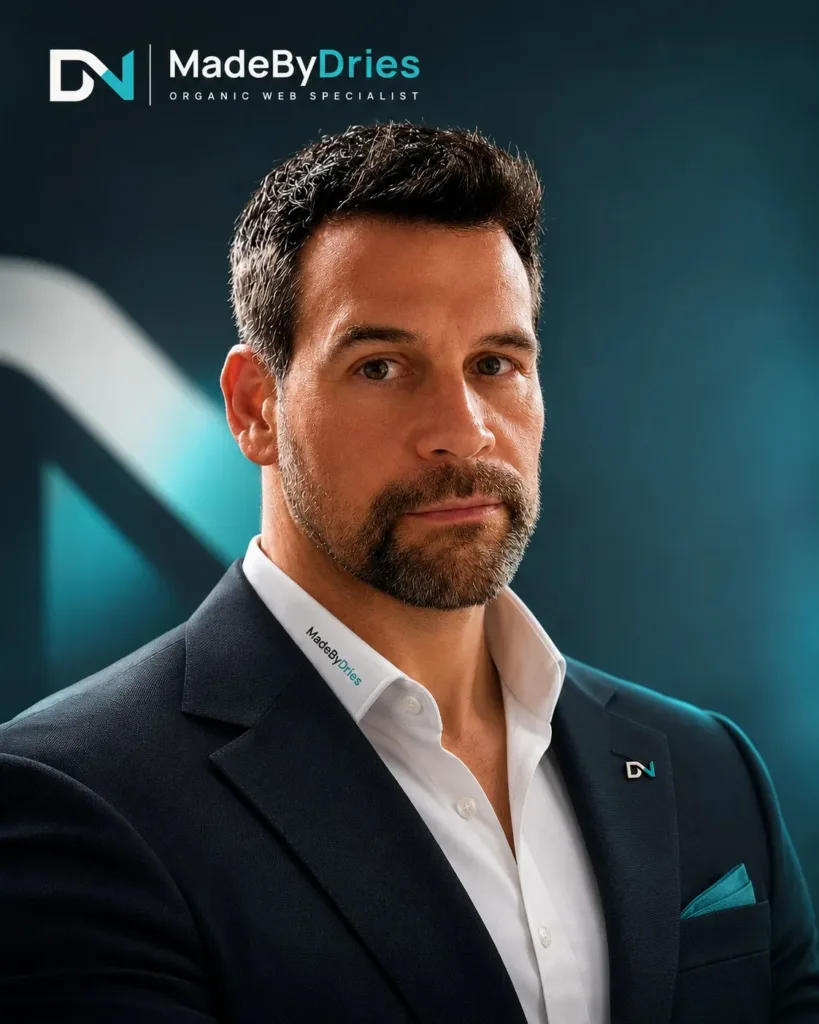
About the specialist
Dries Nijs, Organic Web Specialist
I am Dries Nijs, a developer from Maasmechelen. I design and build websites, online shops and web applications, and make sure they are technically ready to be found. For agencies, I do this as a subcontractor, under their name. MadeByDries is the personal brand under which I work.
FAQ
Frequently asked questions about white-label web development
What is white labelling?
White labelling means having a product or service made by another party and offering it under your own name. In web development, an external developer builds the website, and the agency delivers it as its own project.
What is the difference between private label and white label?
Both terms come from retail. A white-label product is a standard product that several sellers offer under their own brand. A private-label product is made exclusively for one seller. In web development, every project is bespoke for one client; there, the term white-label refers only to the fact that the agency delivers the work under its own name.
How much does white-label web development cost?
That depends on the type of project, the number of templates, the functionality and the integrations. You receive a price per project based on a scope.
Can I hire a WordPress developer for one project?
Yes. There is no minimum commitment. You can bring me in for one website, one online shop or one component, such as an integration or a custom feature.
Do you talk directly to our clients?
We clearly agree on the division of roles and communication in advance. By default, contact with the client runs through your agency. If you want me to join a technical discussion, you decide when and how.
Do you work under a non-disclosure agreement?
Yes, that is possible. Designs, client data and access credentials stay within the project.
Can you take over a project that has already started?
Yes, but I first look at the existing code. After that, you will hear what is usable, what needs redoing and what that means for the schedule. Sometimes continuing to build is the fastest route, sometimes not.
Who handles maintenance after delivery?
We agree on that at the start. Your agency can do the maintenance itself, or you can bring me in for updates and extensions when the client asks for them.
A website or online shop to outsource?
Send me the design or the brief. You will hear what is achievable, within what timeframe and at what price.