

Fijn Mekaniek Nelissen
A bespoke Next.js and React platform with server-side rendering for a precision engineering company, connected to a custom backend and built around technology, structure and strong visual presentation.
- Organisation
- Fijn Mekaniek Nelissen
- Dries Nijs's role
- Next.js and React development, custom frontend, custom backend and technical architecture.
- Sector
- B2B
- Expertise
- Backend Development, Custom Development, Frontend Development
Technology
Implemented features
- Public pages server-side rendered with Next.js
- Custom frontend in React components
- Connected to a custom backend
- Four language versions, each with its own route: Dutch, French, English and German
- Service, machine park and sector pages with a fixed structure
- News overview by year with a separate page for each post
Project information last reviewed for accuracy on .
Project overview
Fijn Mekaniek Nelissen is a precision machining company in Tongeren. On fijnmekanieknelissen.be you can see what the company does: its machining operations, its machine park, the sectors it works for, its certification, news and vacancies.
The site is built as a bespoke platform in Next.js and React, with server-side rendering and a custom backend. This case study covers that technical side: the architecture, the frontend and how a large amount of technical information stays readable.
Technical challenge
A precision engineering company has a lot to say that must be exactly right: machining operations, machines, sectors and certificates. That information is on the site in four languages, must stay readable on every screen and must already be in the HTML when a visitor or a search engine requests the page.
The site also carries large images and a film, so technology and presentation must not get in each other’s way.
Architecture: Next.js and React
The site runs on Next.js with the App Router. The pages are built from React components and rendered on the server; React then takes over the interactive parts in the browser.
Each language has its own route: /nl, /fr, /en and /de. The language versions reference each other in the HTML, so it is clear which pages belong together.
No theme or page builder was used: the frontend is custom-written for this content.
Server-side rendering
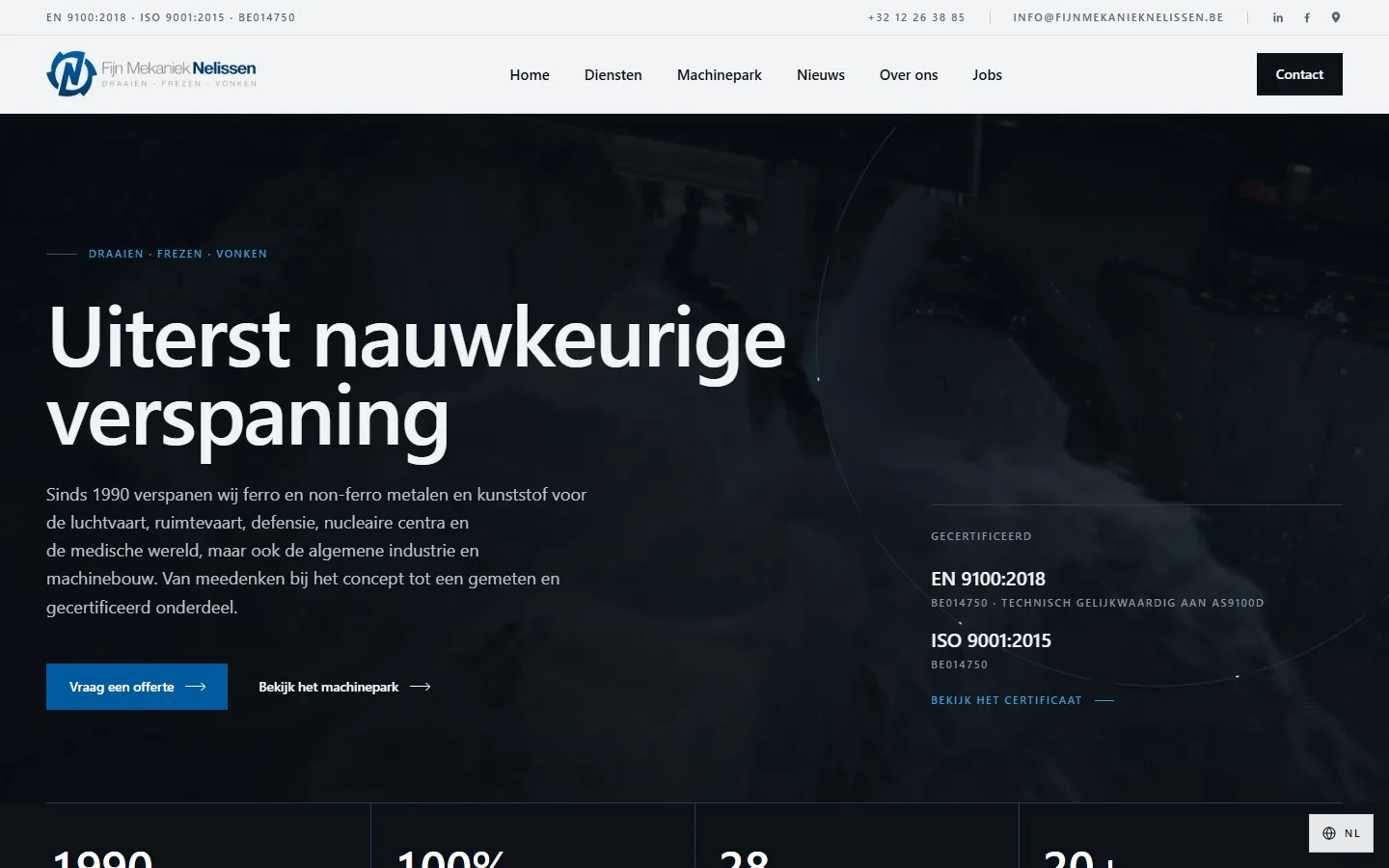
The public pages are server-side rendered with Next.js. As a result, the main content is already in the HTML response, while React then takes over the interactive parts. That provides a strong technical foundation for performance, crawlability and SEO.
- The HTML is available immediately in the first response.
- A strong foundation for crawling and indexing: the content is in the source, not behind JavaScript.
- The first render is usable sooner, because the browser already has the content.
- Suitable for content-rich public pages, such as services, machine park and sectors.
- React interactivity remains available after hydration.
The source of the homepage contains the H1, the subheadings, the text and the structured data. Server-side rendering does not guarantee higher rankings; it ensures that the content is technically accessible.
Custom backend
The frontend is connected to a custom backend: a dedicated layer built for this project, not an off-the-shelf package.
The backend is not public. That is why this page shows only screens from the public site and no admin screens.
Information architecture
The main navigation has six entries: Home, Services, Machine park, News, About us and Jobs, with Contact as a fixed button. Below it sits a fixed structure:
- Servicesfrom turning and milling to measuring and post-processing
- Machine parkgrouped by machining operation
- Sectorssix sectors, each with its own page
- Newsby year, with a separate page for each post
- Certificationa page of its own
- Contactaccessible from every page
Each page has a single H1, and the subpages show a breadcrumb trail.
Responsive frontend
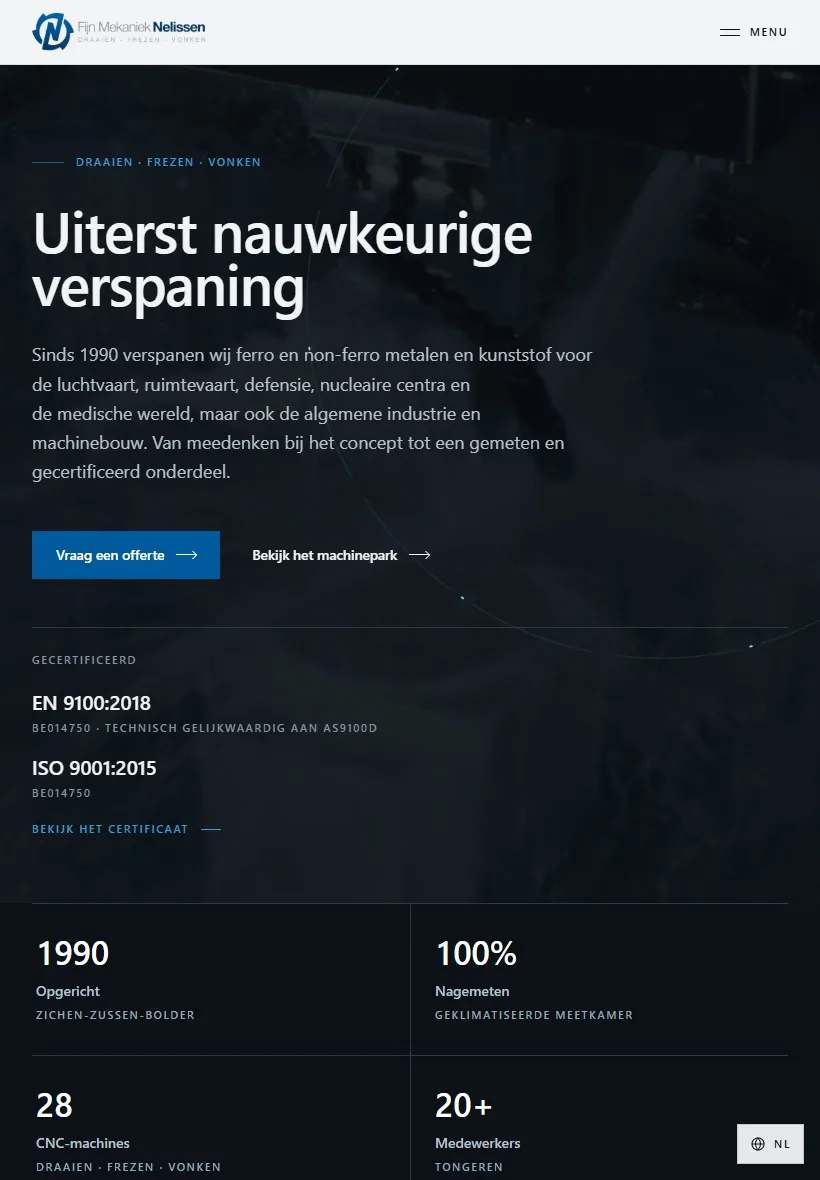
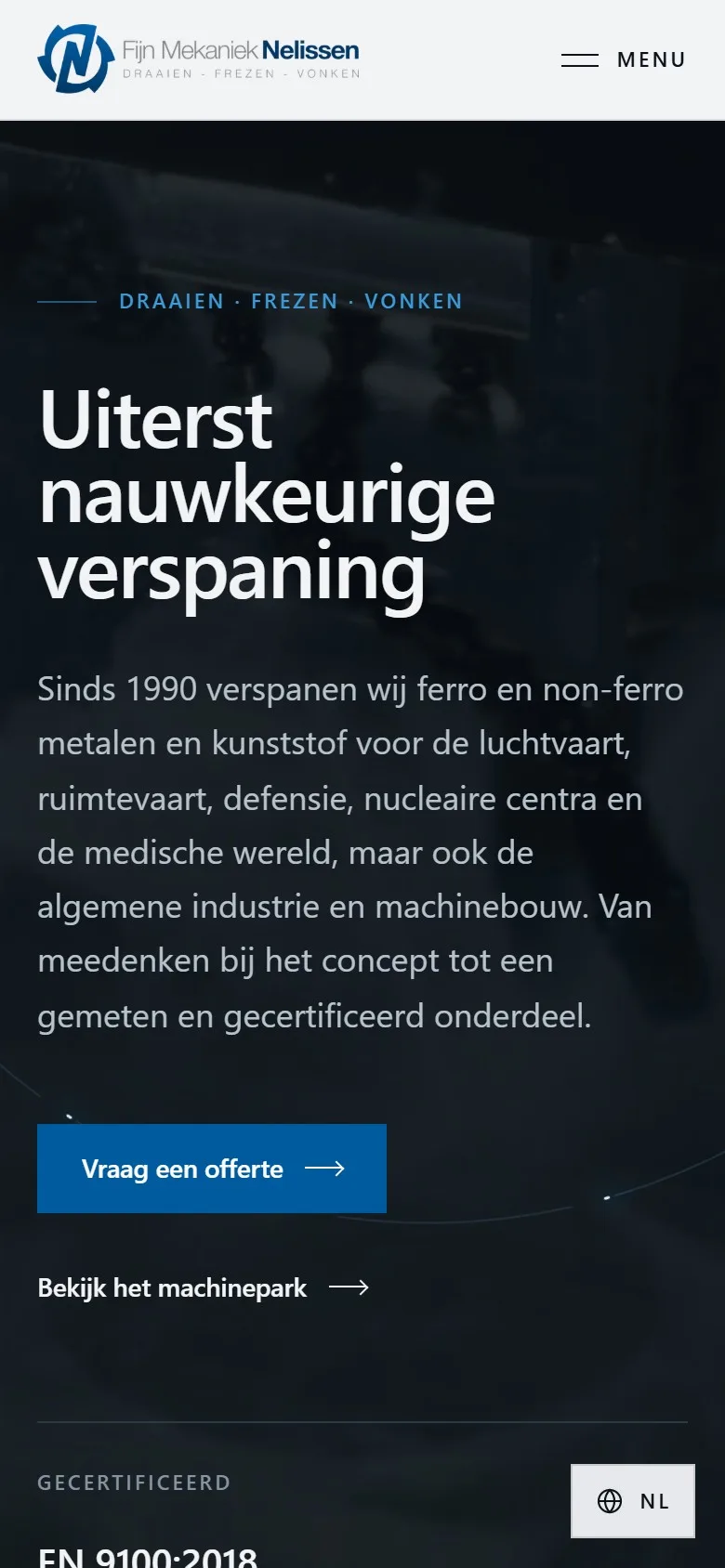
The frontend consists of components that adapt to the screen width. On desktop, the heading and explanation sit side by side; on a phone, they stack and the navigation becomes a menu button.
The language selector remains accessible on every screen.
Content structure
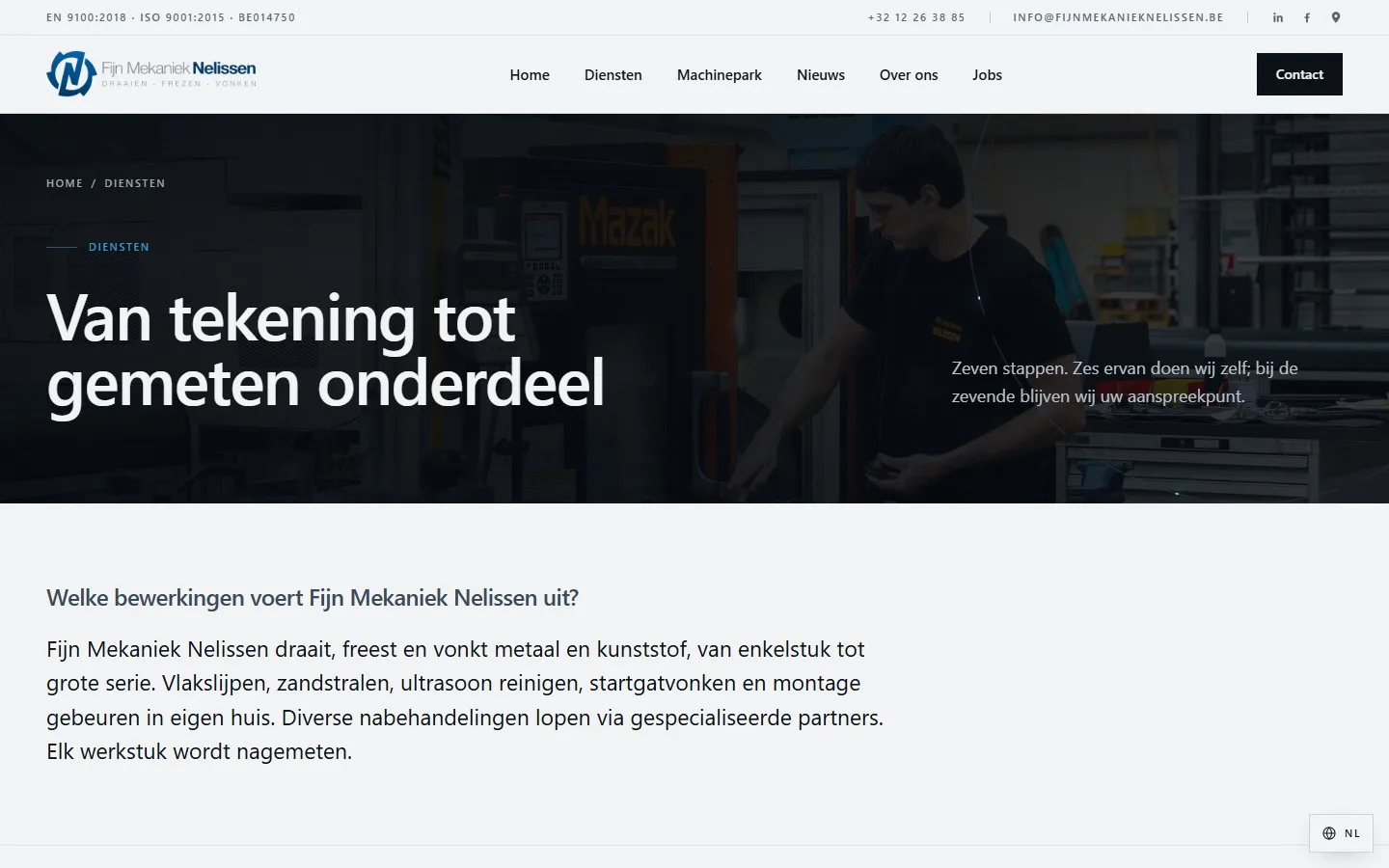
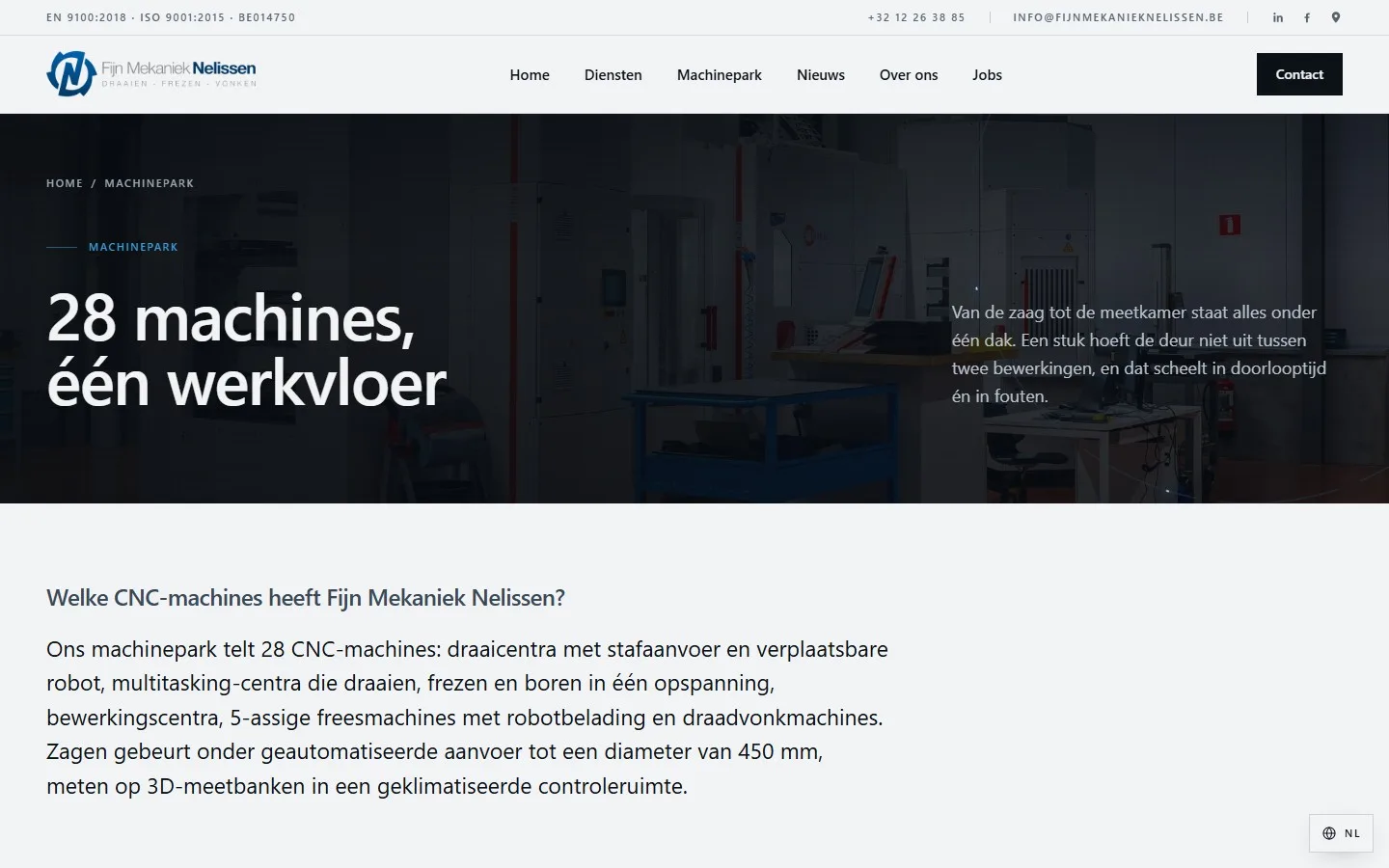
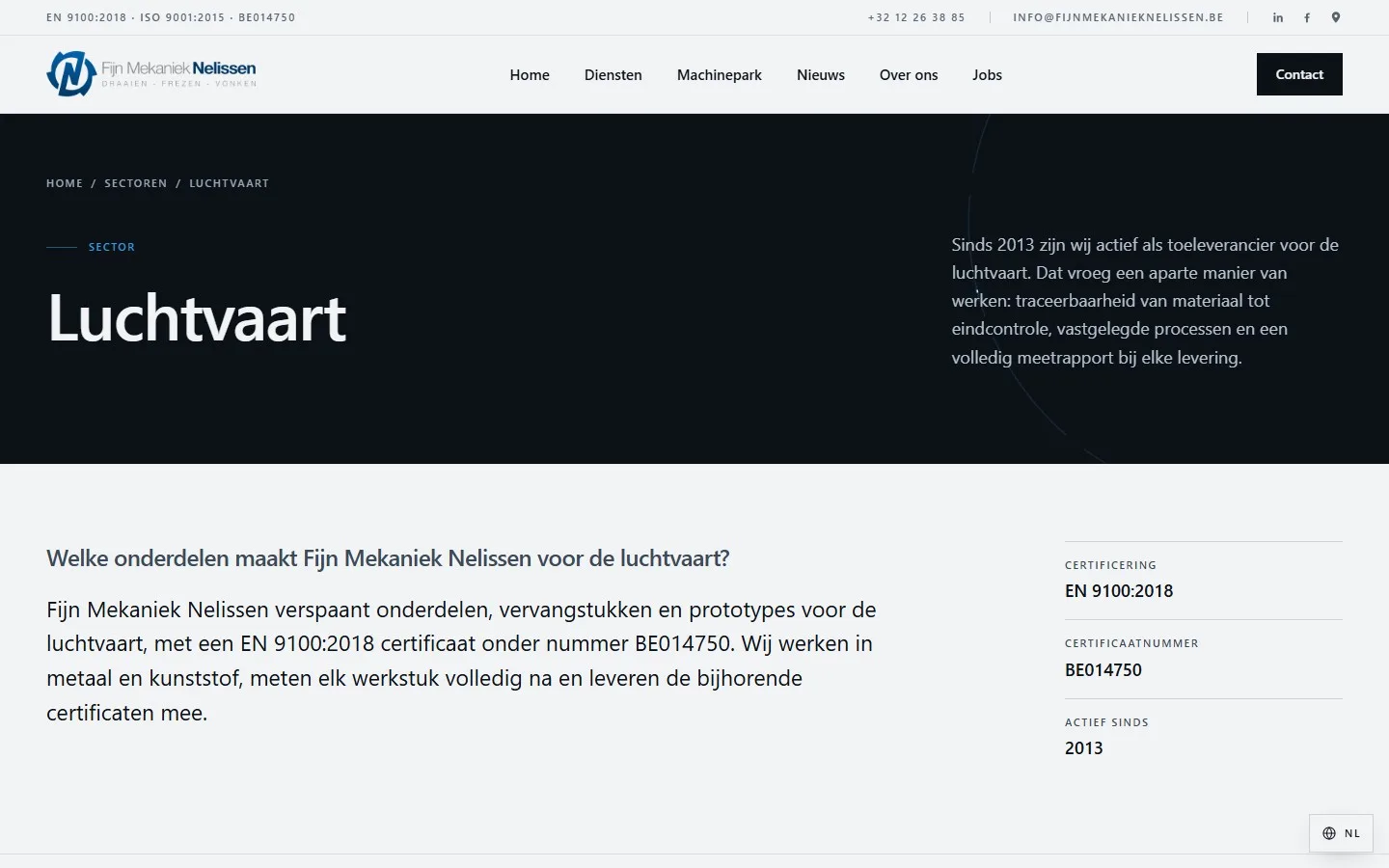
The content pages follow a fixed pattern. At the top is a question as a subheading with the answer directly below it, for example “Which CNC machines does Fijn Mekaniek Nelissen have?”. The detailed information then follows in fixed blocks.
On the sector pages, key facts sit in a separate panel next to the text, and frequently asked questions have their own block. A pattern like this keeps the templates predictable: new content fits into existing components.
Performance and technical foundation
The technical foundation consists of server-rendered HTML, a component-based frontend and a custom backend.
I do not publish measurement figures here. Speed scores only mean something with a fixed measurement method and period, and those have not been recorded for this case study.
Visual implementation
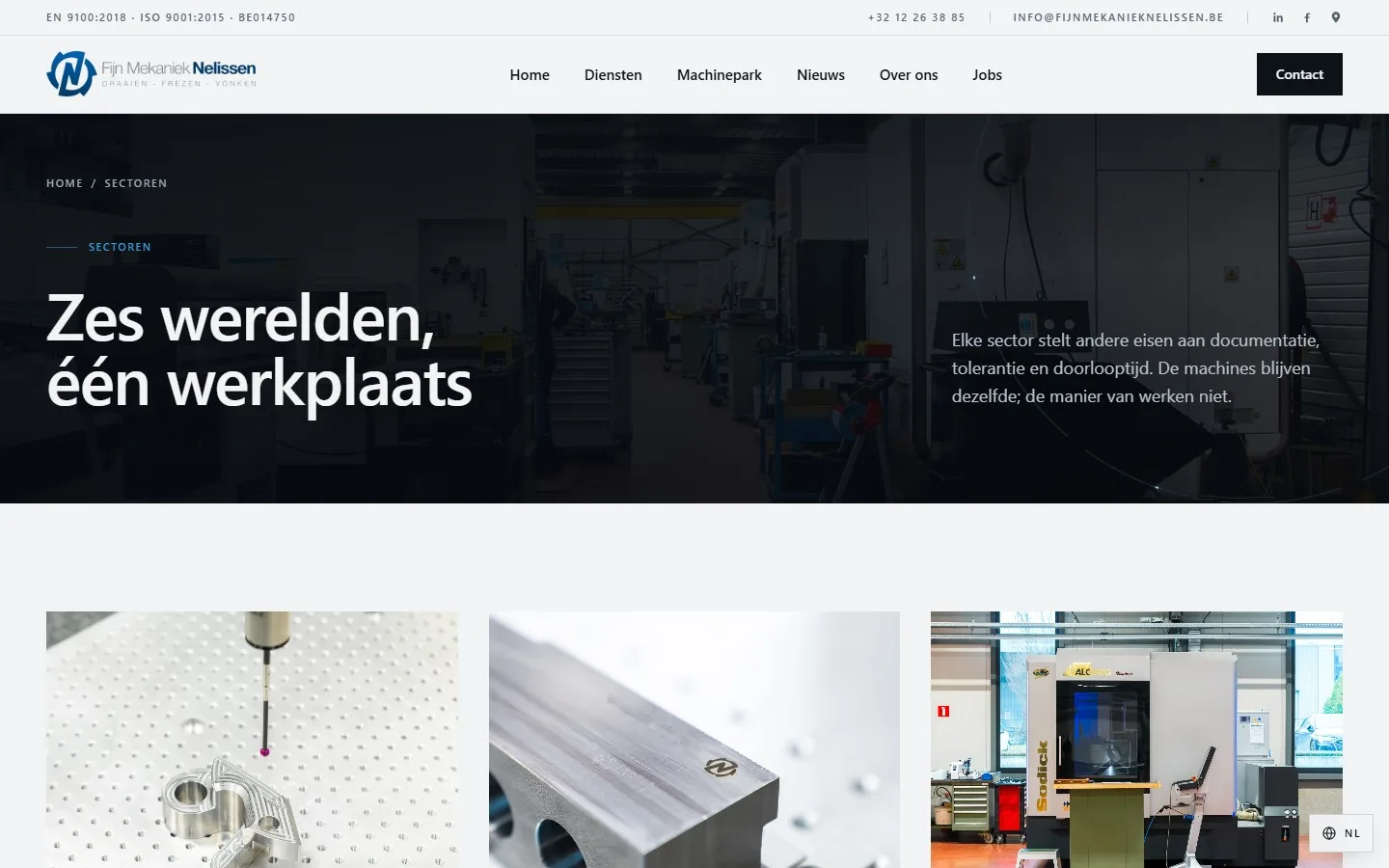
The site uses a dark hero with film, large images of the shop floor and plenty of space around the technical text.
In the frontend, these elements are built as reusable sections: heroes with heading and explanation, image sequences and fact panels.
Key screens
Screenshots of the live site, taken in November 2026.
Technology
Only technology confirmed for this project is listed here.
My role
- Next.js and React development
- Custom frontend
- Custom backend
- Technical architecture
This case study describes my technical contribution to the project.
More about this way of building
How I approach projects like this is described under bespoke web applications and React and Next.js. To discuss a project of your own, get in touch via contact.