


Local SEO
Local SEO: get found more easily in Google Maps and in your own region
When someone searches for a plumber, a restaurant or an accountant, Google often shows a map with three businesses first. With local SEO, I make sure your business profile, your website and your details elsewhere tell the same story, so you are in the running for that map and for the local search results below it.
- Google Business Profile
- Website and structured data
- No mass-produced city pages
- Work directly with Dries
At a glance
What is local SEO?
Local SEO is the optimisation of a business’s online presence for searches with local intent: searches that include a place name or “near me”, or where Google infers from the searcher’s location that they want a business nearby. The goal is visibility in Google Maps, in the local pack of three businesses and in the regular results for your region.
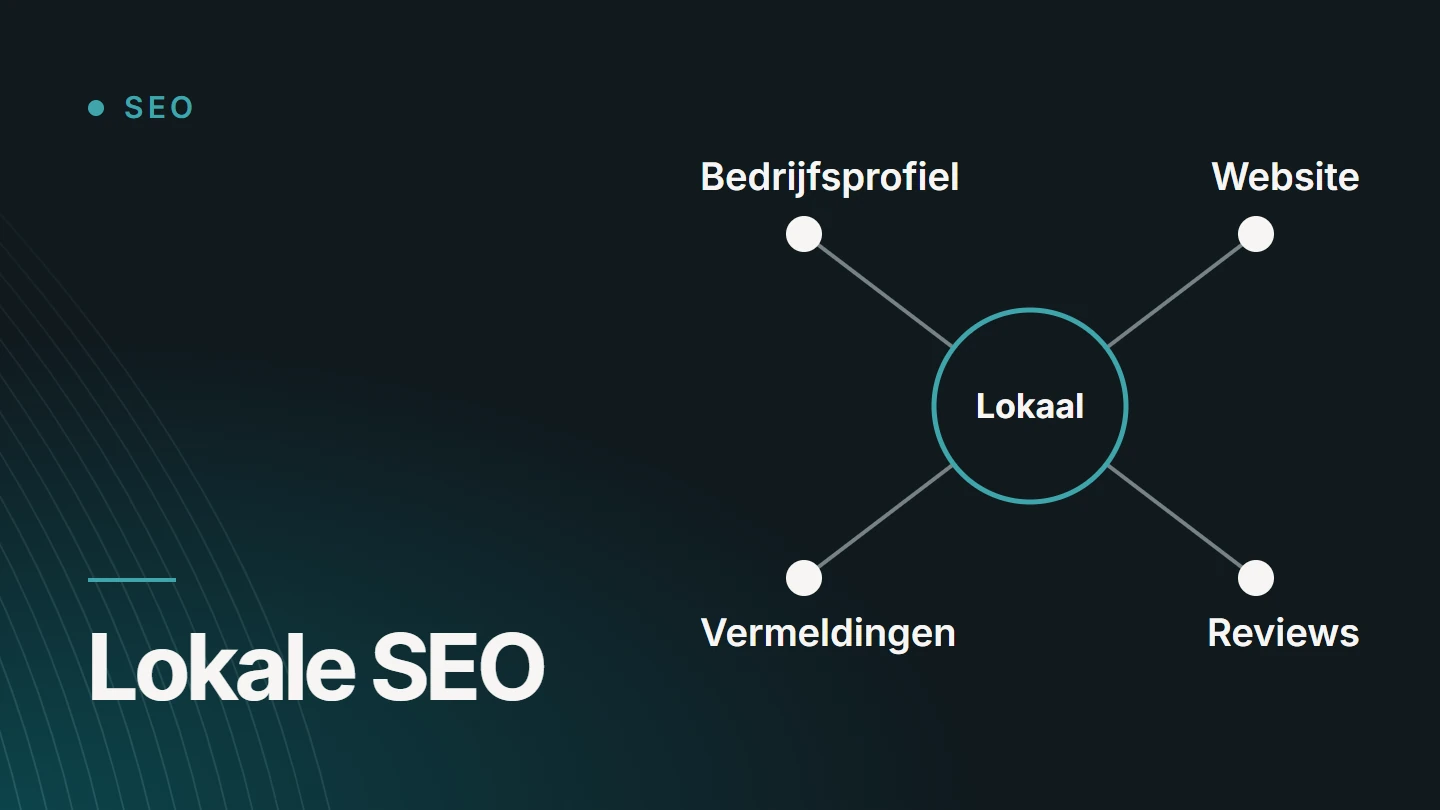
Local SEO involves more than filling in a business profile. Google compares what your profile says with what your website says and with what other websites mention about your business. If those three match, your business is a clear, reliable choice for Google.
Dries Nijs of MadeByDries handles all three components himself: the profile, the content and the website’s technology. Not a package of listings in a hundred directories, but a foundation that is accurate.
Who I work with
Which businesses benefit from local SEO?
Any business whose customers come from a particular municipality or region. Where in Belgium you are based makes no difference. If you are looking for a broader approach for your business, take a look at websites and SEO for SMEs.
- Businesses with premises A shop, a restaurant, a practice or an office that customers visit.
- Tradespeople who come to your home Installers, contractors and repairers with a service area instead of a showroom.
- Professional services Accountants, lawyers, architects and healthcare providers who are searched for locally.
- Businesses with multiple locations Each location has its own address, its own opening hours and its own audience.
- Hospitality and accommodation Where the map, the photos and the reviews are often seen before the website.
- B2B in a region Suppliers and service providers that mainly serve businesses in the area.
The basics
How does Google choose which businesses to show locally?
Google itself names three factors for local results: relevance, distance and prominence. You can read about them in Google’s explanation of local rankings. You can influence two of them.
Within your control
Relevance
How well your business matches what someone is searching for. Complete and accurate information in your profile and on your website helps Google make that connection.
A given
Distance
How far your business is from the searcher or from the location in the search query. Your address is what it is: a business that is far away rarely beats one that is close by.
Within your control
Prominence
How well known your business is, online and offline. Reviews, mentions on other websites and the visibility of your own website all count.
Local SEO therefore works on relevance and prominence. Nobody can promise a position on the map, and it differs for every searcher: someone in the town centre sees different businesses from someone ten kilometres away.
Components
What does local SEO involve?
Eight components that together determine how clearly your business shows up locally. Not every business needs all eight to the same extent.
01
Google Business Profile
The profile that appears in Google Maps and alongside the search results: the right categories, services, opening hours, photos and a description that matches what you do. How to tackle this yourself is explained in Optimising your Google Business Profile.
02
NAP consistency
Your name, address and phone number are exactly the same everywhere: on your website, in your profile, in business directories and on social media. Inconsistent details create doubt, for Google and for customers.
03
Local relevance on your website
Pages that make clear what you do and where. Not by repeating place names, but with content that is accurate for your region: your service area, your projects and your practical information.
04
Location pages
For businesses with more than one branch: one page per real location, with its own address, hours, contact details and content that applies only to that location.
05
Structured data
Markup that lets your website state, in a fixed format, what kind of business you are, where you are located and when you are open. It must match what is visible on the page. More background in structured data and schema markup.
06
Reviews
Genuine reviews from real customers, and how you respond to them. They carry weight for Google and for anyone choosing between three businesses.
07
Citations and local links
Your business listed where it belongs: a professional association, a supplier, a local organisation or a relevant business directory.
08
The website itself
A slow or poorly indexable website undermines everything else. The technical side, from loading time to indexing, is part of my work on technical SEO.
Cohesion
Your Business Profile and your website belong together
Many businesses treat their profile and their website as two separate things. Google does not.
Reviews
Reviews: what helps and what does not
Reviews are one of the most visible parts of local SEO, and an area surrounded by plenty of tricks. I only work with what Google’s guidelines allow.
Within the rules
What I do
- A simple, direct link to your review form
- A fixed moment in your process to ask customers for a review
- Help with responding to reviews, including critical ones
- Following up on what customers keep mentioning in reviews
No tricks
What I do not do
- Buying reviews or having them written
- Offering discounts or gifts in exchange for a review
- Inviting only satisfied customers and filtering out the rest
- Reporting competitors’ reviews without good reason
A profile with fewer but genuine reviews is worth more than one that looks too good to be true. Reviews that break the rules can be removed, and in the worst case the profile may be restricted.
Situations
One location, multiple locations or a service area
The right approach depends on how your business is organised. Three situations, each handled differently.
Shop, practice or office
One location
One profile, one address and a website that makes clear what you do and which area you serve. Most of the gains come from completeness and consistency.
Each in its own place
Multiple locations
Each location gets its own profile and its own page on the website, with details and content that apply only to that location. No copies with a different place name.
You go to the customer
A service area
No showroom, but a region where you work. The profile then shows a service area instead of an address, and the website describes where you go and what you do there.
Scope
What my local SEO work is not
- Dozens of city pages with the same text and a different municipality name each time
- Listing an address where your business is not actually located
- Stuffing keywords or place names into your business name
- Listings in a hundred directories that nobody uses
- A promise of first place in Google Maps
Such tactics work briefly at best, and some go directly against Google’s guidelines. A page for a municipality only makes sense when you have something specific to say about it: a location, projects or an offer that is different there.
Belgium
Local SEO in a Belgian context
Belgium has its own particular considerations. In Brussels and along the language border, customers search in Dutch and in French, and sometimes a municipality has a different name in each language. Your profile and your website need to account for this, without showing the same content twice.
Place names are not always unambiguous either. Limburg is both a Belgian and a Dutch province, and near the border customers search across it. Stating clearly which country and which municipalities you work in saves Google and AI systems from having to guess. How I approach this for my own region is explained on my page about web design and SEO in Belgian Limburg.
In addition, your official business details, such as the name and address under which your company is registered, must match what you show online.
AI answers
Being found locally in AI answers
More and more people put their question to an AI system: which installer near me is recommended, where can I eat tonight? Such a system relies on what it finds about your business: your website, your Business Profile, mentions and reviews.
The work therefore overlaps strongly with local SEO: the same details everywhere, clear content about what you do and where, and structured data that confirms it. What GEO (Generative Engine Optimization) specifically adds is covered on GEO & AI SEO.
Organic Web
Local SEO with Core. Code. Growth.
I treat design, development and visibility as one system. I call it Organic Web. For local visibility, this is what it means.
01
CORE.
Defining what your business is: your services, your service area and the details that must be correct everywhere.
02
CODE.
Putting those details into the profile, on the website and in the structured data, on a technically sound foundation.
03
GROWTH.
Monitoring the results, building reviews into the way you work and adding to the content.
How I work
How I approach local SEO
I start with what is there today, not with a standard package.
When access to your Google Business Profile and Search Console is available, I work with the data they contain. You remain the owner of your profile and your data.
01
Inventory
Your profile, your website and the places where your business is listed, with the differences between them.
02
Priorities
What comes first: errors in your details take priority over new content.
03
Profile and details
Categories, services, hours and description in order, and the same name, address and number everywhere.
04
Website
Content, location pages where they make sense, structured data and the technical foundation.
05
Ongoing support
Checking what changes in calls, direction requests and searches, and adjusting accordingly.
Projects
Websites for local businesses
Three websites for businesses with a local audience, for which I did the design, development and SEO. I only publish results figures when they are confirmed and dated.
Website · GEO · SEO · Web design
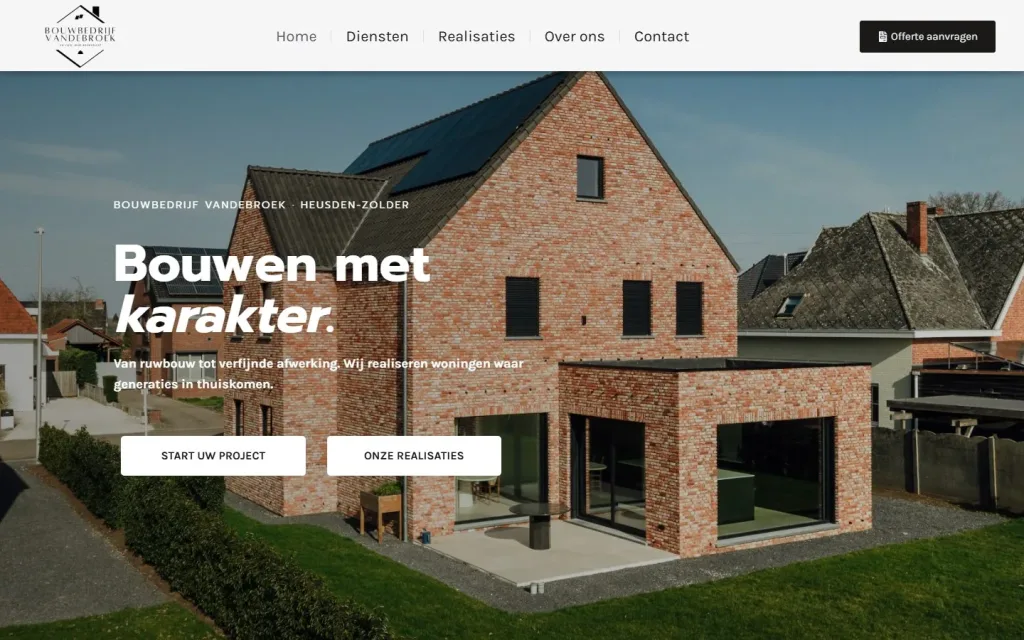
Bouwbedrijf Vandebroek
Website for Bouwbedrijf Vandebroek in Heusden-Zolder, with service pages for new builds and renovation, completed projects and a quote form with file upload.
- WordPress
Website · SEO · Web design
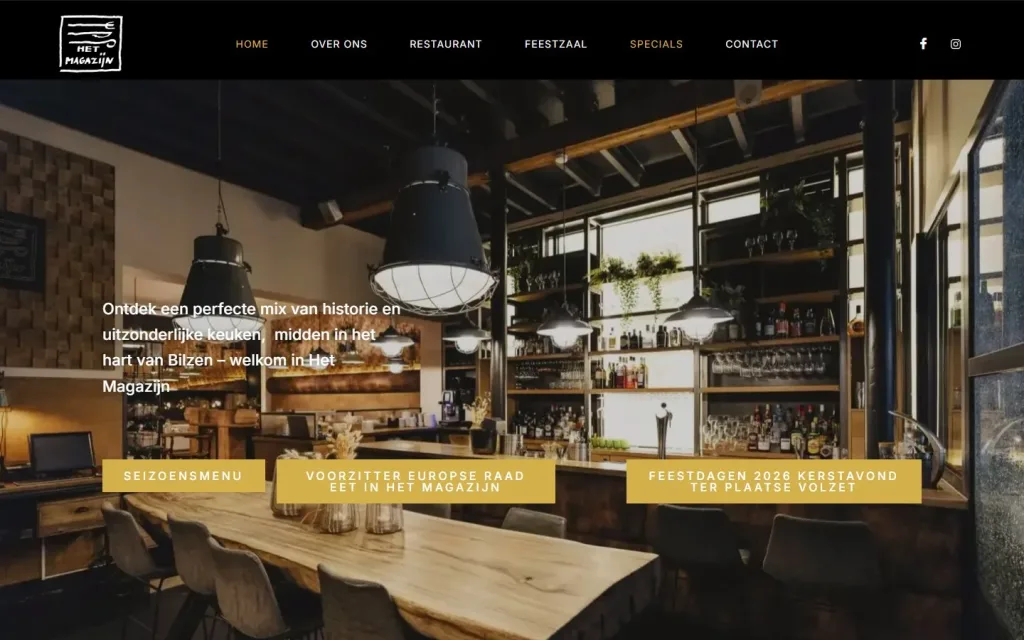
Het Magazijn
Restaurant website for Het Magazijn in Bilzen, with online table booking, separate pages for the restaurant and the function room, and specials.
- WordPress
Website · SEO · Web design
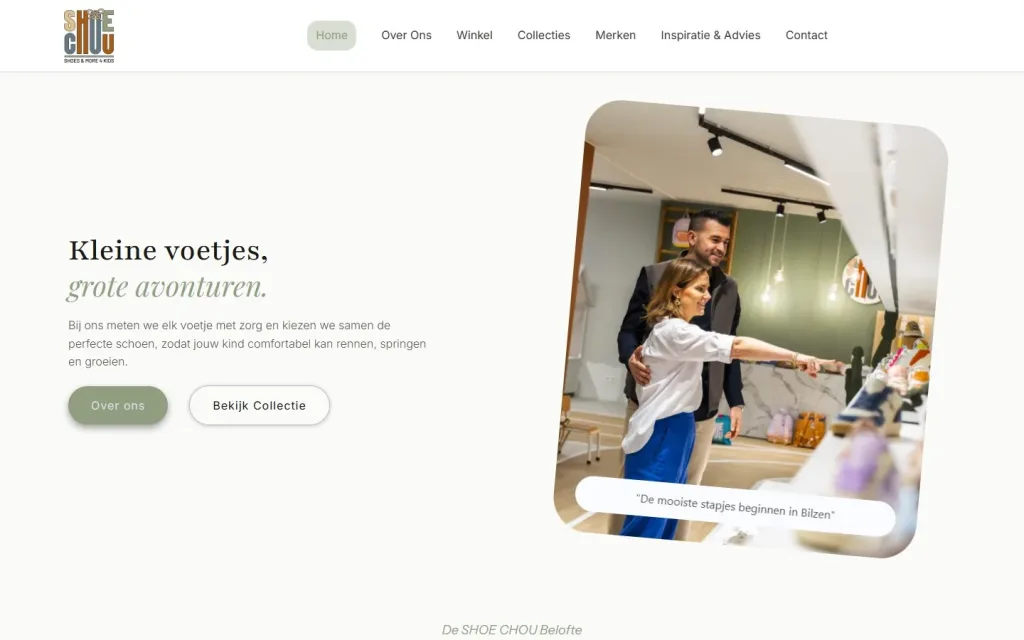
Shoe Chou
Website for the children's shoe shop Shoe Chou in Bilzen, with collection and brand pages, shop information, and inspiration and advice.
- WordPress
Pricing
How much does local SEO cost?
I do not publish a fixed price or package for local SEO. After an initial analysis, I can define the scope and price in concrete terms.
The work can be a one-off project, such as getting your profile and details in order, or longer-term support. There is no mandatory monthly plan. For the factors that determine the price, see how much SEO costs in Belgium.
- Number of locations One address takes less work than five.
- State of the profile A new profile, a neglected profile or duplicate profiles.
- State of the website Whether additions are enough, or the foundation needs fixing first.
- Languages Dutch only, or French as well.
- Competition in your region A city with many providers requires more work than a small municipality.
- One-off or ongoing Only the basics, or ongoing monitoring and content as well.
Why Dries
Local SEO from someone who also builds your website
- Profile and website I make the changes to the website myself, rather than passing on recommendations.
- No tricks Only work that stays within Google’s guidelines.
- Honest about distance I tell you upfront what you cannot influence.
- Direct contact You work with the person who does the work.

About the specialist
Dries Nijs, Organic Web Specialist
I am Dries Nijs, a developer and SEO consultant from Maasmechelen. I have been building for the web since the 1990s and work for businesses throughout Belgium. For local SEO, I combine the Business Profile, the content and the technology of the website so that they confirm each other. MadeByDries is the personal brand under which I work.
FAQ
Frequently asked questions about local SEO
What is local SEO?
Local SEO means optimising your Business Profile, your website and your citations so that your business is visible to people searching in your area. It covers Google Maps, the local pack of three businesses and the regular results with local intent.
What is an example of local SEO?
A joiner who completes the categories and services in his Google Business Profile, explains on his website what each service involves and which municipalities he works in, makes his address and phone number consistent everywhere and asks customers for a review after each job.
How do you rank higher in Google Maps?
By working on the two factors you can influence: relevance and prominence. That means a complete and accurate Business Profile, a website that backs up your services and your service area, consistent details and genuine reviews. Distance to the searcher remains a given.
How much does SEO cost per month?
I do not publish a fixed monthly fee, because the work varies widely from business to business. After an initial analysis, I can define the scope and price in concrete terms. Local SEO can also be a one-off project rather than a monthly plan.
Do I need a website, or is a Google Business Profile enough?
A profile alone already puts you on the map. But Google uses your website to understand exactly what you do, and customers use it to compare. For services where people look for information first, the website often makes the difference.
Should I create a separate page for every municipality?
No. Pages that differ only in the place name add nothing and can be seen as doorway pages. A page per municipality only makes sense when you have a location, your own projects or a different offer there.
How long does it take for local SEO to have an effect?
Corrections to your profile show up quickly. The effect of better content, new reviews and citations builds up over months. I cannot promise a timeframe: it depends on your starting point and the competition in your region.
Do you only work for businesses in your own region?
No. From Maasmechelen, I work for businesses throughout Belgium. Projects for clients in the Netherlands are also possible. Local SEO does not require an on-site visit: the work takes place in your profile, on your website and in your data.
Want to be found more easily in your area?
Send me your website and the municipality or region your customers come from. I will look at what is there today and where the gains are.