


WordPress
WordPress specialist for websites, online shops and bespoke development
WordPress can do a lot, but it needs the right implementation. The difference between a website that lasts for years and one that struggles after every update lies in how it is built. As a WordPress specialist, I design, develop and maintain websites and online shops, and write the code a standard theme cannot provide.
- Design and development
- WooCommerce
- Custom themes and plugins
- Technical SEO built in from the start
At a glance
What does a WordPress specialist do?
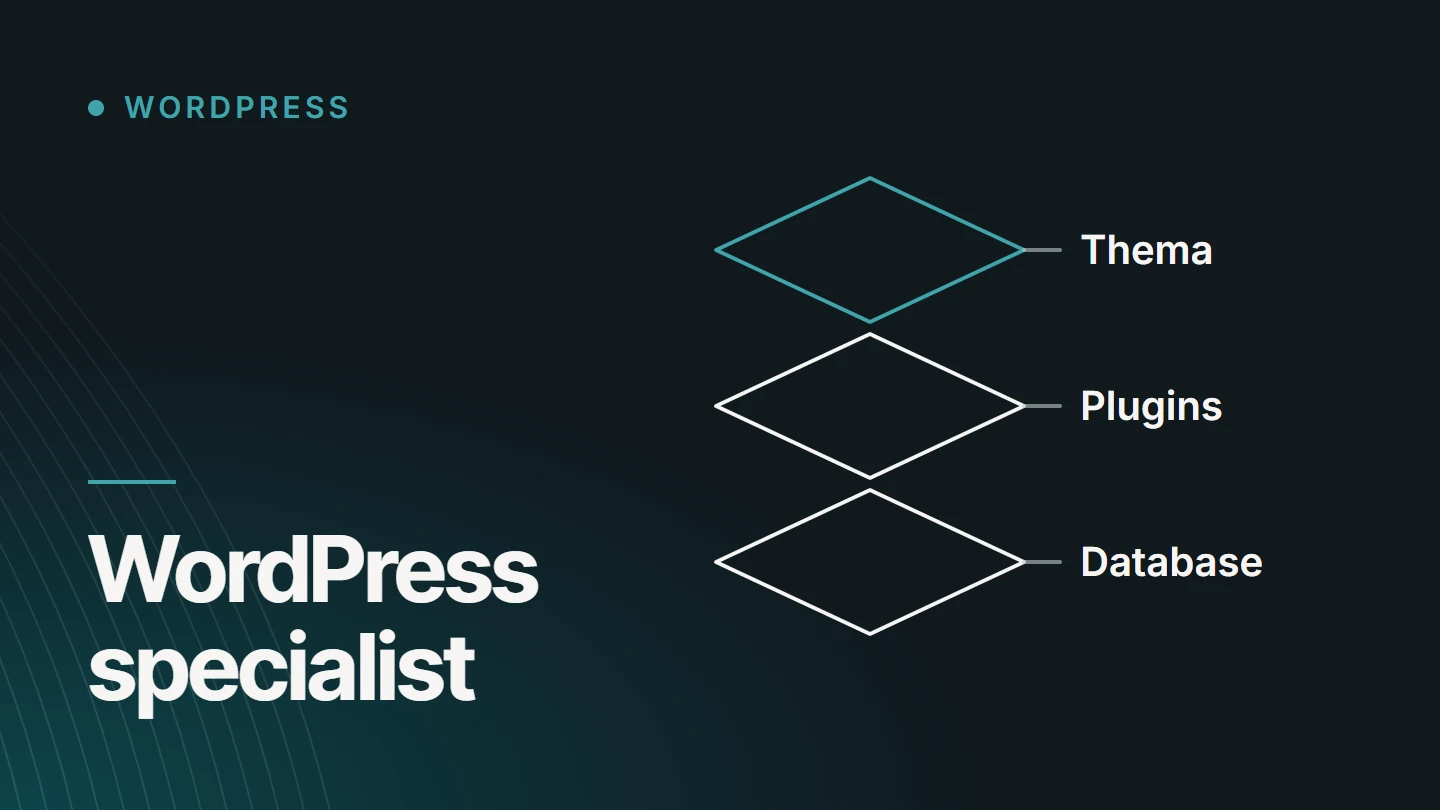
A WordPress specialist is someone who can not only set up WordPress, but also understands how it works on the inside: the theme, the plugins, the database and the code in between. You notice the difference when a website needs to be faster, has to stay secure or must do something no existing plugin can.
At MadeByDries, that WordPress specialist is Dries Nijs, a web designer and developer from Maasmechelen. I design and build WordPress websites and WooCommerce shops, develop bespoke themes and plugins, connect WordPress to other systems and keep existing websites technically healthy.
You engage me by project or assignment, directly and without an intermediary. I work independently for businesses and agencies, rather than seeking a permanent WordPress developer role.
Services
When to engage a WordPress specialist
Four types of work. The first three each have a dedicated page with full details.
Development
WordPress development: what I build myself
A standard installation takes you a long way. These elements turn a functional website into one that truly fits.
01
Bespoke theme
A custom design system rather than a purchased theme: consistent colours, typography and building blocks, with only the code the website needs. Where the project calls for it, I use Elementor so you can assemble pages yourself within that defined design.
02
Bespoke plugins
I write business-specific functionality as a custom plugin: a content type, calculation, search tool or tailored ordering process. This keeps it working if the theme ever changes. A custom plugin includes only what you use, without settings screens for features nobody needs.
03
Custom content types and fields
Projects, vacancies, products or locations get their own entry screen with the right fields. The person managing content fills in a form without needing to know how the page is assembled.
04
Integrations
WordPress can exchange data with other systems through APIs: a CRM, newsletter tool, stock system or custom application. I assess feasibility for each system. I build integrations to handle and report errors at the other end, rather than simply stopping.
05
Performance
Correctly sized images, only the scripts each page uses, caching and a stable layout. Speed comes from less, better code. It starts with the theme: anything that is never loaded does not need optimising.
06
SEO and structured data
A logical URL structure, correct metadata, canonicals and markup describing who you are and what you offer, from a single source. Read what this involves in Structured data and schema markup. More in-depth work falls under technical SEO.
07
As few plugins as practical
Every plugin is someone else’s code that needs maintaining. For major components, I choose proven, actively maintained plugins. For small, specific requirements, I prefer to write the code myself.
The choice
When is WordPress the right choice?
A specialist considers where their tools fit best. WordPress excels at content, and is less suited to applications.
WordPress works well for
- business websites with services, case studies and news
- WooCommerce shops
- knowledge bases, blogs and other frequently updated content
- multilingual websites
- organisations that want to manage their own content
Other solutions work better for
- platforms with accounts, roles and custom processes
- applications where users mainly enter and edit data
- dashboards with real-time data
- software you want to offer to clients as a service
For that second group, I build in React and Next.js: see bespoke web applications. Sometimes the best solution combines WordPress for content with bespoke development for the application. Using WordPress purely as a content source behind a separate frontend, known as a headless setup, is an option I assess for each project: it solves certain problems while making administration more complex. The full comparison is in WordPress or bespoke development with React/Next.js?
Glossary
WordPress specialist, developer, freelancer or agency?
The terms overlap. A WordPress developer writes code: themes, plugins and integrations. A WordPress web designer designs and builds the frontend. A WordPress specialist or expert usually combines both with knowledge of hosting, speed and SEO. A WordPress agency delivers this work with a team; a WordPress freelancer delivers it as one person.
I am that one person. This means direct communication with someone who knows your project from design through to code, and it also means I cannot take on every project at once. If your project needs a team available full-time for several weeks, I will say so in our first conversation.
Do you work at an agency and need a developer behind the scenes? That is also possible through white-label web development.
Existing website
Improving or taking over an existing WordPress website
Not every project starts from scratch. Often, there is already a WordPress website that has become slower, less secure or harder to manage than intended.
- Review Which theme and plugins are running, what is outdated and where the risks lie.
- Clean up Remove unnecessary plugins and unused code, and tidy the database.
- Repair Errors after an update, a form that will not submit or a broken layout.
- Expand A new feature, an additional language or an online shop added to an existing website.
- Speed up Find and resolve the causes of slowness, rather than masking them with caching.
- Take over Technical care for a website whose original developer is no longer available.
If the review shows the foundations cannot be salvaged, a website redesign is the more honest recommendation. I will tell you before starting repairs.
Organic Web
WordPress within Organic Web: Core. Code. Growth.
WordPress is a means to an end. The goal is a website where design, code and visibility reinforce each other. I call this approach Organic Web.
01
CORE.
First, establish what you offer, who you serve and which questions your website needs to answer.
02
CODE.
Then create the design and code in WordPress, without unnecessary bulk and with the technical foundations built in.
03
GROWTH.
Then maintain and expand: content, features and visibility.
I build an integration so that it catches and reports an error on the other side, rather than silently failing.
Projects
WordPress projects in practice
A business website with a quote request form, a rental site in four languages and a service platform with a WooCommerce shop. Each combines design and WordPress development in one pair of hands.
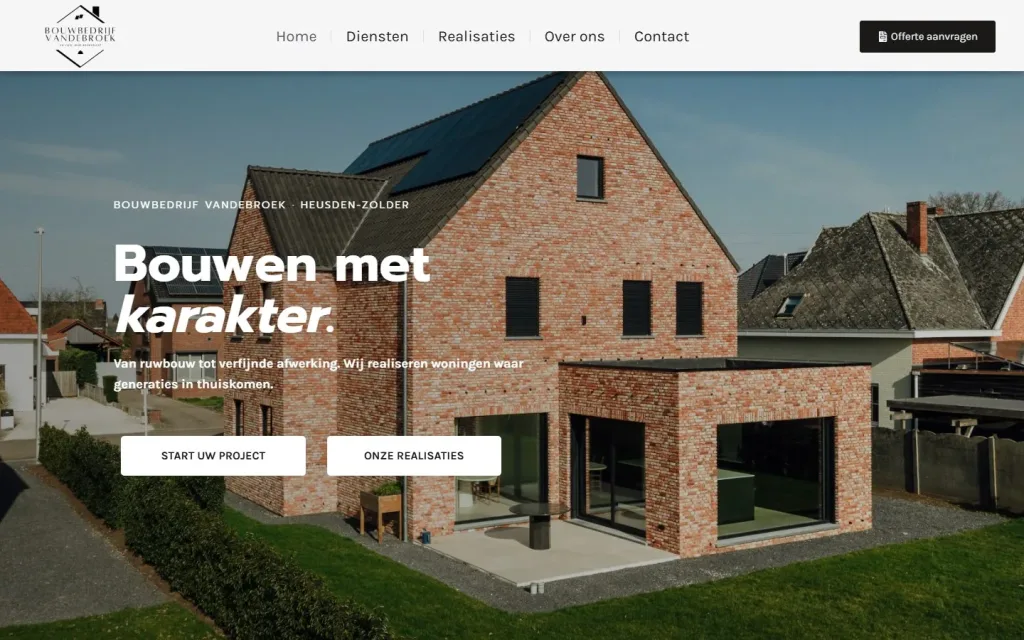
Website · GEO · SEO · Web design
Bouwbedrijf Vandebroek
Website for Bouwbedrijf Vandebroek in Heusden-Zolder, with service pages for new builds and renovation, completed projects and a quote form with file upload.
- WordPress
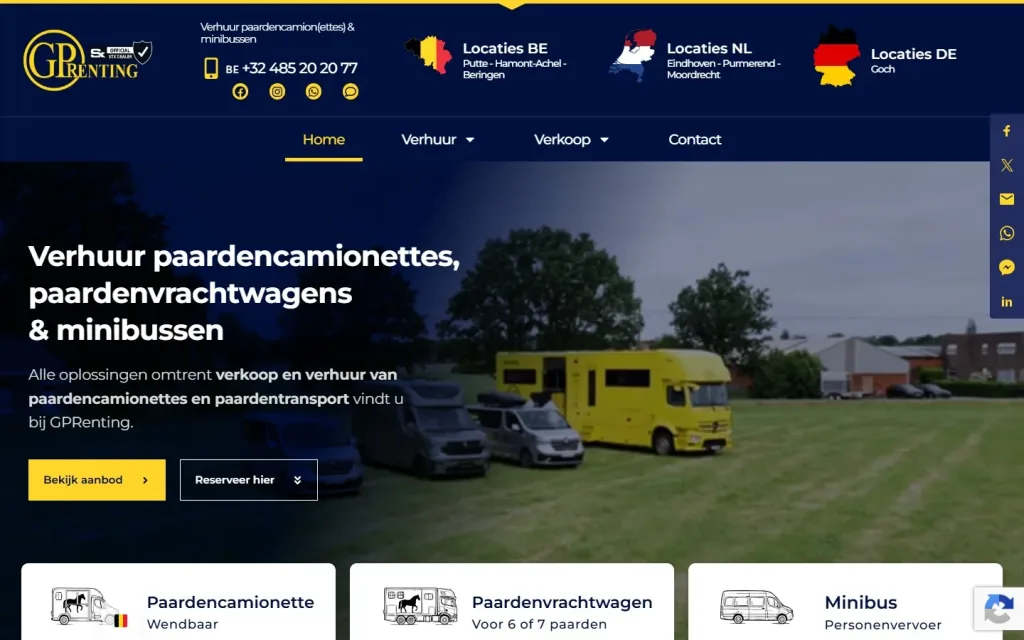
Website · Multilingual SEO · SEO · Web design
GPRenting
Rental website for horse vans, horse lorries and minibuses, with a quote and booking form, pick-up locations in Belgium and the Netherlands and four language versions.
- WordPress
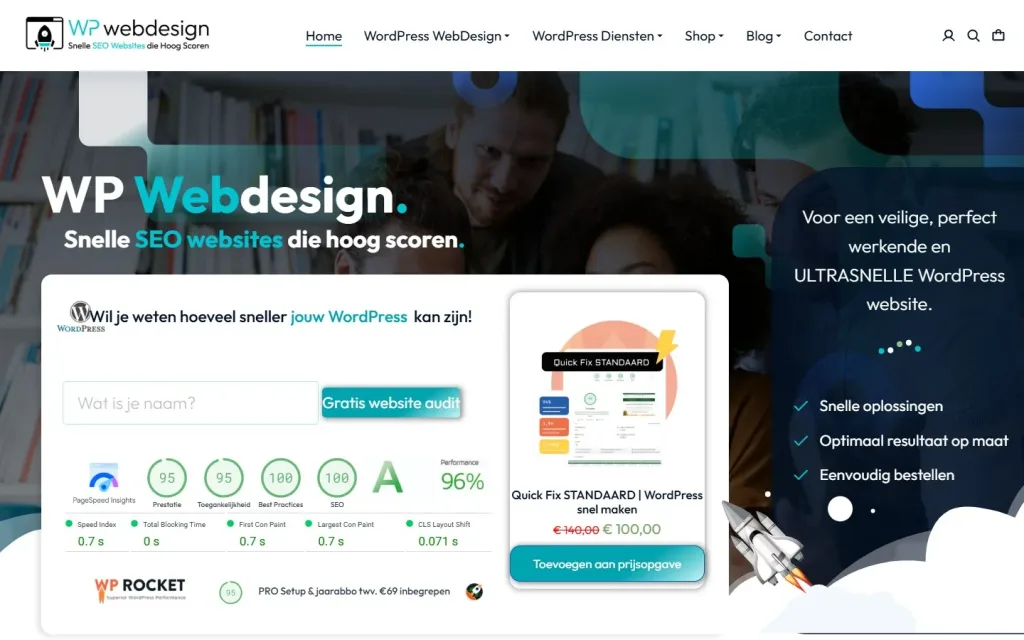
Website · E-commerce · Performance Optimisation · SEO
WP Webdesign
WordPress services platform for web design, speed optimisation, SEO, maintenance and audits, with a WooCommerce shop for fixed packages.
- WordPress
- WooCommerce
Pricing
How much does a WordPress specialist cost?
That depends on the work. For a new WordPress website, my project prices apply: a compact website from € 1,495 excl. VAT, a business website from € 2,495 excl. VAT and an online shop from € 3,495 excl. VAT. The final quote is based on the agreed scope. The pricing breakdown is in How much does a website cost?
For bespoke development, repairs and maintenance, there is no meaningful starting price: a small change and a bespoke plugin are too far apart. After an initial analysis, I can define the scope and price. You receive a price per assignment in advance. For small changes and support, there are also an hourly rate and hour bundles.
- Type of assignment A new website, an online shop, bespoke development or a repair.
- Scope The number of page types, features or integrations.
- Existing situation A blank slate, or a website with a history.
- Bespoke development How much custom code is needed alongside existing components.
- Languages Each language needs its own content, structure and checks.
- Ongoing support A one-off delivery, or maintenance afterwards.
Why Dries
Why choose Dries as your WordPress specialist?
- Designer and developer The same person creates the design and code.
- Code where it is needed I write themes, plugins and integrations myself.
- Visibility built in Technical SEO and structured data are built into the foundations.
- No platform to push I also build in React and Next.js, and I will tell you what suits your project.
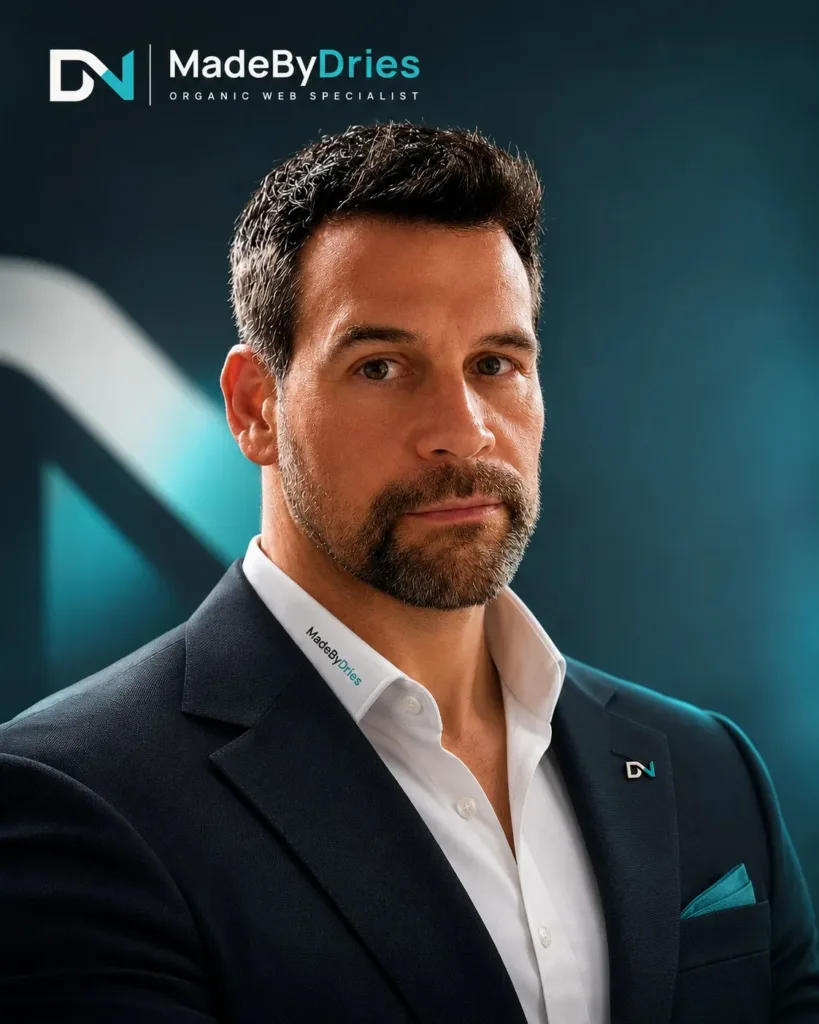
About the specialist
Dries Nijs, Organic Web Specialist
I am Dries Nijs. I have been building for the web from Maasmechelen since the 1990s, and WordPress and WooCommerce have been a constant in that work for years. This website itself runs on WordPress, with custom plugins for the projects, the prices and the menu. MadeByDries is the personal brand under which I work.
FAQ
Frequently asked questions for a WordPress specialist
Is WordPress free?
The software itself is free and open source: see the explanation from WordPress. A website does cost money, though: the design and development, the hosting, the domain name and sometimes paid plugins. Free software is not the same as a free website.
What is WordPress used for?
For websites where content is central: business websites, blogs, knowledge bases, portfolios and, with WooCommerce, online shops. It is a content management system: people without technical knowledge can use it to manage pages, posts and products.
What are the pros and cons of WordPress?
Pros: you own your website, you can switch hosting or supplier, there is an extension for almost everything and it is easy to manage. Cons: the software needs to be kept up to date, too many plugins make a website slow and vulnerable, and it is not the right tool for genuine applications.
What is the difference between a WordPress specialist and a WordPress developer?
A developer writes code. A specialist takes a broader view: design, structure, hosting, speed, security and visibility. In practice, a good website needs both. I combine the two, so you do not have to translate between two parties.
Can you take over an existing WordPress website?
Yes. I start by reviewing the theme, the plugins, the backups and the hosting. Afterwards, you know what is in order, what needs attention and what I would take on. If the foundations are sound, I build on them. If they are not, you will hear that first.
How long does a WordPress website last?
Technically, a well-built and well-maintained WordPress website can last for years. What tends to age sooner is the design, the content or the structure, because your business changes. Regular maintenance and a custom theme that does not depend on an external theme builder extend its lifespan.
What are the most common problems with WordPress?
Slow pages, conflicts after an update, outdated plugins and a back end that has become cluttered. The cause is almost always the same: too many components from too many different makers, with no one overseeing the whole.
What are the alternatives to WordPress?
Closed website builders such as Wix or Squarespace, a platform like Webflow, Shopify for online shops, or bespoke development in React and Next.js. Each has its place. The choice depends on who manages the content, how much freedom you need and how far the project goes beyond a standard website. I work through one of those comparisons in Webflow vs WordPress.
Do you also work for agencies?
Yes. Agencies bring me in for WordPress development behind the scenes, for example when a project needs more code than their own team can deliver. We agree on roles and communication clearly in advance.
Need someone to take charge of a WordPress project?
Tell me what is in place today, what needs to come next and where things are getting stuck.